Why we chose Christchurch: a city comparison report
A long-form comparison of Auckland, Wellington, Christchurch, Dunedin and Queenstown, written by two Singaporeans who had to choose one from 8,500 km away. Demographics, housing, transport, jobs, education and lifestyle, plus a scorecard you can weight to your own priorities.
If you find this useful, you can support our work here.
01Summary
Five key findings
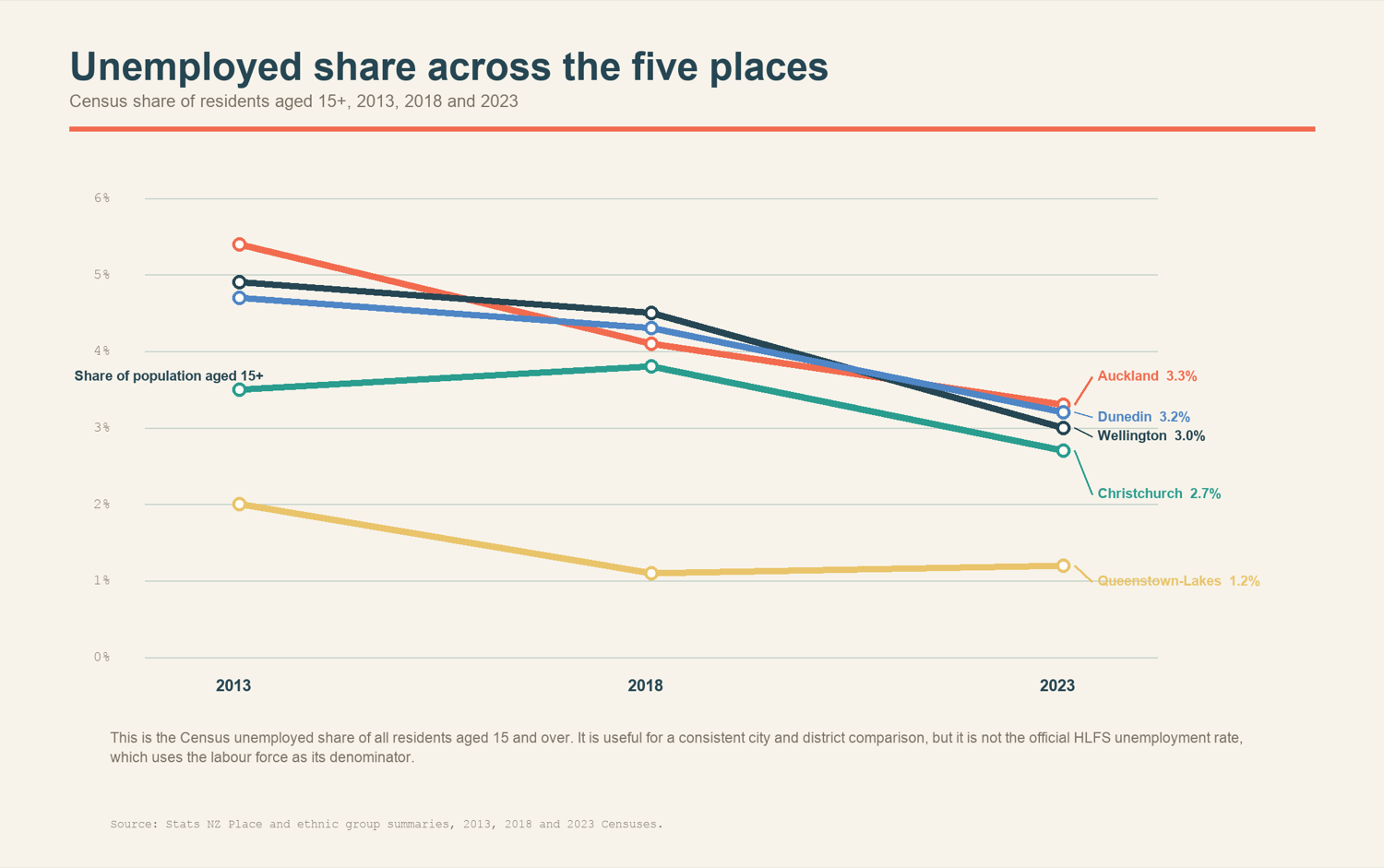
1. Auckland: the biggest, most varied job market, but the highest everyday costs. Auckland is by far the largest city, with 1.66 million people and the deepest hiring in finance, technology, professional services and head-office roles. It is also the most international place here: 42.5% of residents were born overseas. The trade-off is cost. Housing is among the most expensive in the country, and long cross-city commutes can swallow a bigger salary, so where you live relative to work matters as much as the suburb.
2. Wellington: the highest professional incomes, but heavily tied to government. Wellington pays working-age professionals the most, with a median income of $80,500 in 2023 for people aged 30 to 64, the highest of the five. A lot of that rests on the public sector, which makes up 19.4% of local jobs. The national Public Service has been shrinking, losing 3,044 full-time roles (down 4.6%) between late 2023 and mid-2025. Tech and creative firms offer alternatives, but there is no sign yet they can replace those jobs at the same pace.
3. Christchurch: the best balance of cost and lifestyle. Incomes here are moderate, with a median of $56,600 in 2023, but housing costs sit well below Auckland and Queenstown, so households tend to keep more of what they earn. The city is flat and easy to get around, its Census unemployed share was low at 2.7%, and the post-earthquake rebuild keeps steady demand in construction, engineering, health, technology and aerospace.
4. Dunedin: the lowest housing costs, anchored by a few big employers. Dunedin is a compact city of 128,901 people with a median income of $57,000 and the lowest broad housing costs of the five. The University of Otago, the hospital and research shape the job market, which gives a stable base but fewer fallback options if one role ends. It is also the least international city, with 21.1% of residents born overseas.
5. Queenstown: booming demand, but the hardest place to afford. The Queenstown-Lakes district grew from 28,224 residents in 2013 to 47,808 in 2023, up about 70% in a decade, and its Census unemployed share was just 1.2%, easily the lowest. But it is the most expensive place to rent or buy, and many tourism and hospitality jobs do not pay enough to cover local housing. It is the second most international city, with 40.2% of residents born overseas.
So the real question is not which city is best overall. It is which one gives your household the best mix of a secure job, affordable housing and a manageable weekly routine.
Five-city comparison
Figures are 2023 Census measures or broad 2026 planning ranges unless stated otherwise. All money figures are NZD and should be checked against current listings and job offers.
| Measure | Auckland | Wellington | Christchurch | Dunedin | Queenstown |
|---|---|---|---|---|---|
| Scale and age | Largest market; median age 35.9 | Compact capital; median age 34.9 | Large South Island city; median age 37.5 | Smaller university city; median age 37.0 | Fast-growing district; median age 35.5 |
| Main job sectors | Finance, technology, professional services, health, logistics, manufacturing, screen | Government, policy, professional services, digital, science, screen, health | Engineering, aerospace, manufacturing, technology, health, construction, agritech, logistics | Health, education, research, technology, games, professional services, tourism | Tourism, hospitality, construction, property, transport, film, tourism technology |
| Salary planning figure | About $75,000 | About $80,000 | About $70,000 | About $62,000 | About $65,000 |
| One-bedroom rent | $1,900-$2,500 a month | $1,900-$2,500 a month | $1,800-$2,450 a month | $1,450-$1,950 a month | $2,200-$3,100 a month |
| Broad property range | $900k-$1.15m | $650k-$850k | $550k-$700k | $430k-$560k | $1.0m-$1.4m |
| Transport | Best network range, but commute depends on corridor | Strong central walking and regional rail; hills and renewals matter | Flat and cycle-friendly; a car widens suburban options | Compact centre; hills and dispersed work make a car useful | Buses are improving; SH6 congestion and winter conditions matter |
| Climate | Warm, humid and wet in every season | Mild, windy and changeable | Drier, sunny and strongly seasonal | Cool, coastal and changeable | Alpine, cold in winter and highly seasonal |
| Good fit for | Broad career options, diverse communities, international access | Policy, professional, digital and creative work with a central routine | Families and skilled workers seeking space, services and outdoor access | Education, health and research households seeking a smaller city | Outdoor-focused households with secure work and housing |
| Main constraint | Housing cost and cross-city travel | Wind, older housing and public-sector cycles | Some specialist career paths are thinner | Fewer employers and colder housing stock | Housing scarcity and a difficult rent-to-wage balance |
The included Excel file has an Interactive City Matcher. Set the importance of each criterion from 0 to 5 and it calculates a weighted result across the five cities. A close result should be treated as a shortlist, not a final instruction.
02Auckland
City position: The broadest job market and most diverse population, with the highest day-to-day penalty from housing cost and congestion.
Demographics
Ethnic makeup
Auckland is New Zealand's most ethnically diverse major region. In the 2023 Census, 49.8% of residents identified as European, 12.3% as Māori, 16.6% as Pacific peoples, 31.3% as Asian, 2.7% as Middle Eastern, Latin American or African, and 0.9% as another ethnicity. Because people can choose more than one group, the total exceeds 100%.
The practical meaning is visible in everyday life: multilingual workplaces, established migrant communities, a wide range of religious and cultural organisations, and food shopping that extends far beyond a standard supermarket. It can be easier here than in the other four cities to find community networks connected to a particular language, cuisine or faith. Diversity also varies by area, so south, central, east, west and the North Shore can feel like different versions of Auckland.
At the 2023 Census, 42.5% of the Auckland region's residents were born overseas (about 704,000 people), compared with 28.8% nationally, the highest share of the five cities compared here.
Age and household profile
Auckland's median age was 35.9 years in 2023, younger than the national profile and consistent with a large working-age and family population. The region combines central apartments and one-person professional households with multigenerational homes and larger family households in suburban areas. That creates broad demand for schools, health services and family-sized housing, but it also means the city average is unusually poor at describing any one suburb.
For a relocating household, the demographic advantage is choice. The drawback is competition. Popular school zones, well-connected neighbourhoods and modern family homes can attract many applicants, while childcare waitlists and cross-city travel can become major planning issues.
Housing and property market
Property trend
Auckland experienced the familiar national cycle: a sharp low-interest-rate upswing in 2020 and 2021, followed by a substantial correction as interest rates rose, credit tightened and affordability worsened. QV reported that average regional values in March 2026 were only 9.6% above March 2020, down 3.8% from a year earlier. In June 2026, the regional average was approximately $1.19 million and values had fallen another 0.7% over the quarter.
This does not mean every suburb is falling or that homes are suddenly affordable. Premium school zones, renovated character homes and well-connected townhouses can behave differently from apartments, fringe growth areas or properties with difficult insurance and hazard issues. Buyers generally have more negotiating room than at the peak, but well-located homes in good condition still attract a premium.
Neighbourhood and price guide
| Area | Price | Often suits |
|---|---|---|
| CBD, Wynyard Quarter, Eden Terrace | $$ | Apartment living and short central commutes |
| Ponsonby, Grey Lynn, Herne Bay | $$$ | Inner-city lifestyle, cafés and character housing |
| Mt Eden, Epsom, Sandringham | $$$ | Families seeking central access and established schools |
| Takapuna, Milford, Devonport | $$$ | North Shore beach life and established amenities |
| Albany, Hobsonville, northwest growth areas | $$ | Newer housing, families and northern or western jobs |
| New Lynn, Titirangi, Henderson | $$ | More space, western rail in selected areas and west-coast access |
| Ellerslie, Onehunga, Royal Oak | $$ | Central-south balance and good motorway access |
| Manukau, Papatoetoe, Māngere | $ | Airport, logistics and south Auckland employment |
Price is relative within the city: $ = most accessible, $$$ = premium.
The broadest rule is to buy or rent for your most frequent commute, not for a map-centre location. A cheaper home on the wrong side of the harbour or motorway bottleneck can create a higher total cost once time, fuel, parking and stress are included.
Transport and accessibility
Modes, costs and practical reliability
Buses
Auckland’s buses use AT HOP, Auckland Transport’s reusable tap-on, tap-off smartcard: you load money onto it, touch it to the reader as you board and again as you get off, and fares are cheaper and capped compared with paying by cash or bank card, with zone-based fares from about $0.95 on the CityLink loop up to about $7.90 for four-plus zones. Coverage is the widest of any NZ city and the dedicated Northern Busway, a bus-only rapid-transit corridor with its own motorway-side stations, is genuinely fast, but reliability drops where buses share traffic and cross-suburb trips often need a transfer.
Trains
Rail shares the same zonal fares and is strong along the west, south and east lines into the city centre. Coverage is limited to those corridors, and renewals or disruptions can force transfers.
Ferries
Harbour ferries are scenic and practical for Devonport, Waiheke and a few harbour communities at route-specific fares. Away from the wharves they are of limited use, and weather can affect sailings.
Driving
A used car runs roughly $8k–$20k plus insurance, fuel, maintenance, licensing and parking. It is the most flexible option for dispersed jobs and family logistics, but peak congestion, pricey CBD parking and unpredictable cross-region trips are the trade-off.
Walking and cycling
Excellent in a handful of central neighbourhoods and along expanding separated cycleways, but distance, hills, rain and gaps in the protected network stop them replacing most trips.
🗺️Route maps, the rail map and a journey planner are at Auckland Transport (at.govt.nz).
An AT HOP weekly cap can control repeated public-transport spending when all eligibility rules are met, but it does not solve first- and last-kilometre access. The best Auckland transport strategy is usually corridor-specific: live near a reliable busway, rail station, ferry or a direct frequent bus to your workplace.
Planned upgrades
The City Rail Link is scheduled to open in 2026 after testing, driver training and network preparation. It turns the city-centre terminus into a through-running rail network and adds new central stations, changing journey patterns and frequency. It is a major upgrade, but the practical benefit still depends on access to the rail network at both ends.
The Eastern Busway is under construction between Pakuranga and Botany, with the full connection planned for 2027. It is intended to improve reliable rapid transit in east Auckland. Network redesigns, temporary disruption and project timing should be checked before signing a lease based on a future travel-time promise.
Employment
Key industries and example jobs
Auckland's regional agency, Tātaki Auckland Unlimited, is backing the city to become a global "tech city" (its Tech Tāmaki Makaurau strategy), a fast-growing screen and film sector now worth close to $1.5 billion, and clean technology across energy, transport, food and the built environment. Those growth bets sit on top of Auckland's existing role as the country's deepest market for corporate, finance, professional-services and trades work.
| Industry | Example jobs | What is changing | Practical note |
|---|---|---|---|
| Finance and insurance | Financial analyst, accountant, risk specialist, AML analyst, underwriter, adviser, claims professional | Fintech, automation, cyber risk, data-led underwriting and regulation | Deepest New Zealand market for head-office finance |
| Technology | Software engineer, cloud engineer, data analyst, cybersecurity specialist, product manager, UX designer | AI adoption, health technology, financial technology and advanced digital services | More employers and clearer career ladders than the other four cities |
| Professional services | Consultant, lawyer, auditor, recruiter, marketer, project manager | Infrastructure, transformation, sustainability and digital consulting | Networks and local experience can strongly affect access |
| Manufacturing and food | Production engineer, food technologist, maintenance technician, quality specialist, supply planner | Automation, export food, circular production and advanced manufacturing | Much of the work is south or east of the CBD |
| Trade, freight and aviation | Supply-chain analyst, customs specialist, freight coordinator, airport operations, logistics manager | E-commerce, resilient supply chains, port and airport connectivity | Shift patterns and corridor location matter |
| Health and construction | Nurse, allied-health professional, civil engineer, quantity surveyor, site manager, tradesperson | Population growth, hospital demand, housing and major infrastructure | Registration or New Zealand certification may be required |
| Screen and creative | Producer, production coordinator, editor, animator, designer, advertising specialist | International production, content technology and interactive media | Project work can be less stable than permanent corporate employment |
Auckland contributes roughly two-fifths of New Zealand's economic output. Its advantage is not that every industry grows at once. It is the number of employers and adjacent roles available without leaving the region. That makes redundancy or a poor employer fit somewhat easier to manage than in a single-industry town.
Income trend and wage outlook
This report uses about $75,000 gross annually as a planning benchmark. Stats NZ recorded median total personal income of $60,100 for residents aged 30-64 in 2023, up from $47,500 in 2018 and $41,500 in 2013. The city offers high salaries in selected fields, but rent, childcare, parking and transport can remove the apparent advantage.
Near-term wage growth is likely to be selective rather than universal. Finance, technology, health, engineering and infrastructure skills can command a premium when experience is current and locally recognised. Generalist professional hiring is more exposed to business confidence. Negotiate the entire package, including hybrid work, parking, KiwiSaver treatment, professional registration and commute time.
Education
Universities and tertiary study
Auckland has New Zealand's broadest choice of universities. The University of Auckland is the country's highest-ranked university, strong across medicine and health, engineering, business, law and the sciences. Auckland University of Technology (AUT) is more applied and industry-connected, with well-regarded health, business, engineering and creative-technology programmes, and Massey University's Albany campus adds business, sciences and aviation. Confirm the current provider and qualification before relying on an older campus name.
Auckland is especially strong for medicine and health, engineering, business, law, computing, creative technology, trades and applied vocational training. International students should compare tuition, accommodation and commute as one package. A cheaper room far from campus can be a false saving.
Lifestyle, climate and recreation
Climate and daily rhythm
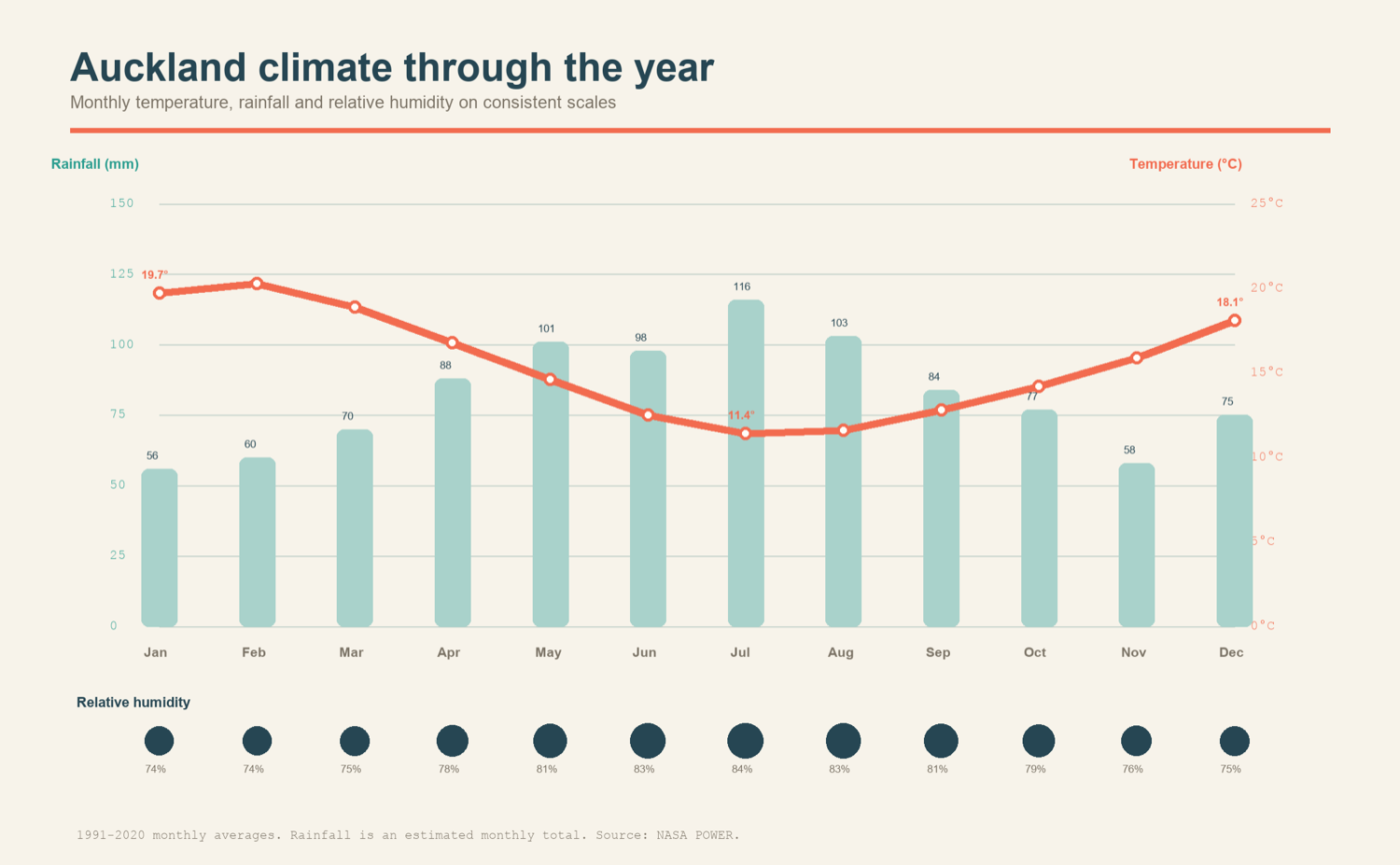
Auckland is the warmest and most humid city in this comparison. Summers are generally warm, winters mild, and rain possible in every season. The longer outdoor season is a genuine advantage, although humidity, mould, drainage and stormwater deserve serious attention. Daily life is metropolitan but decentralised. Your local town centre, beach, park and commute corridor often shape life more than the CBD.
Outdoors and attractions
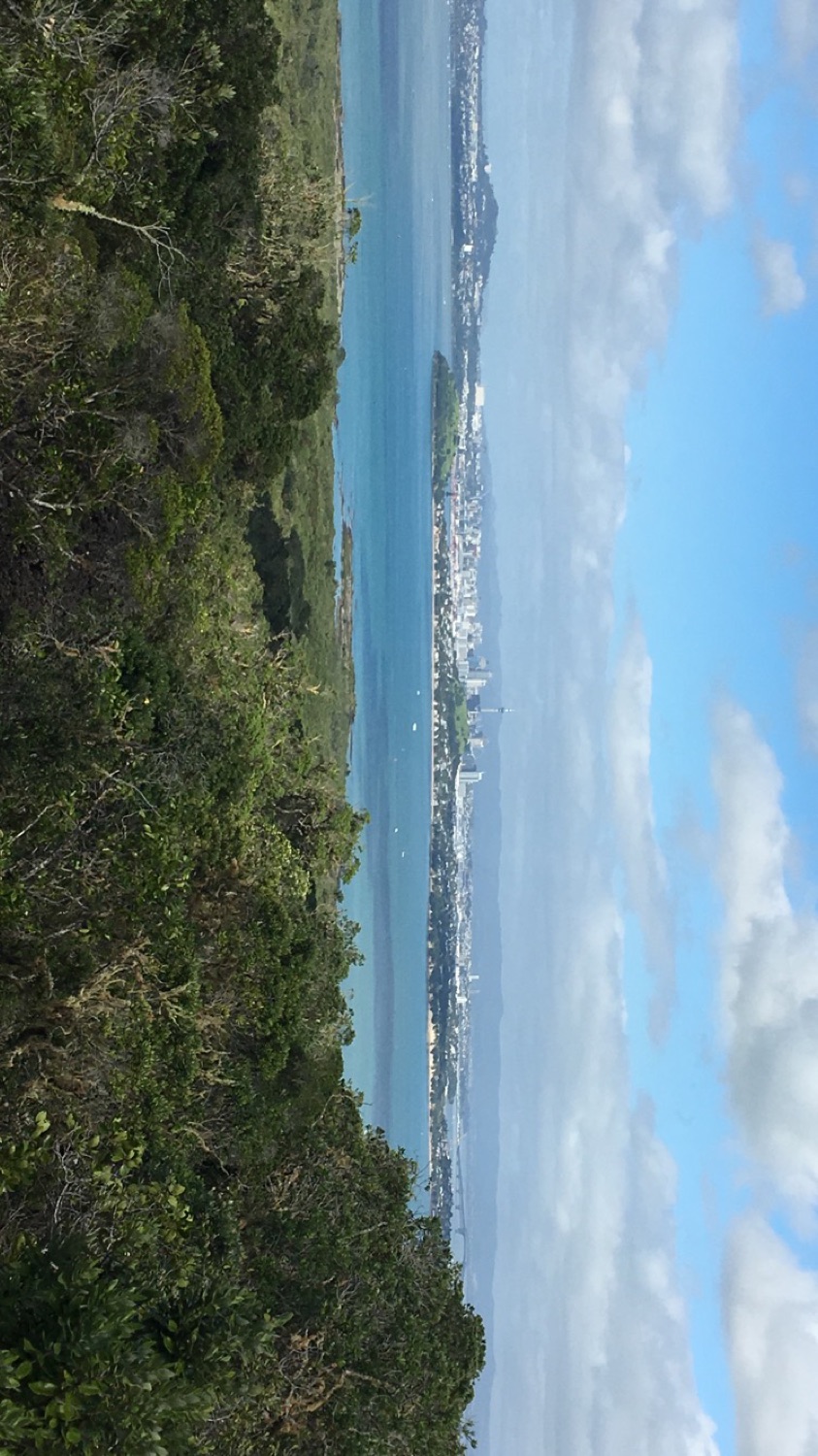
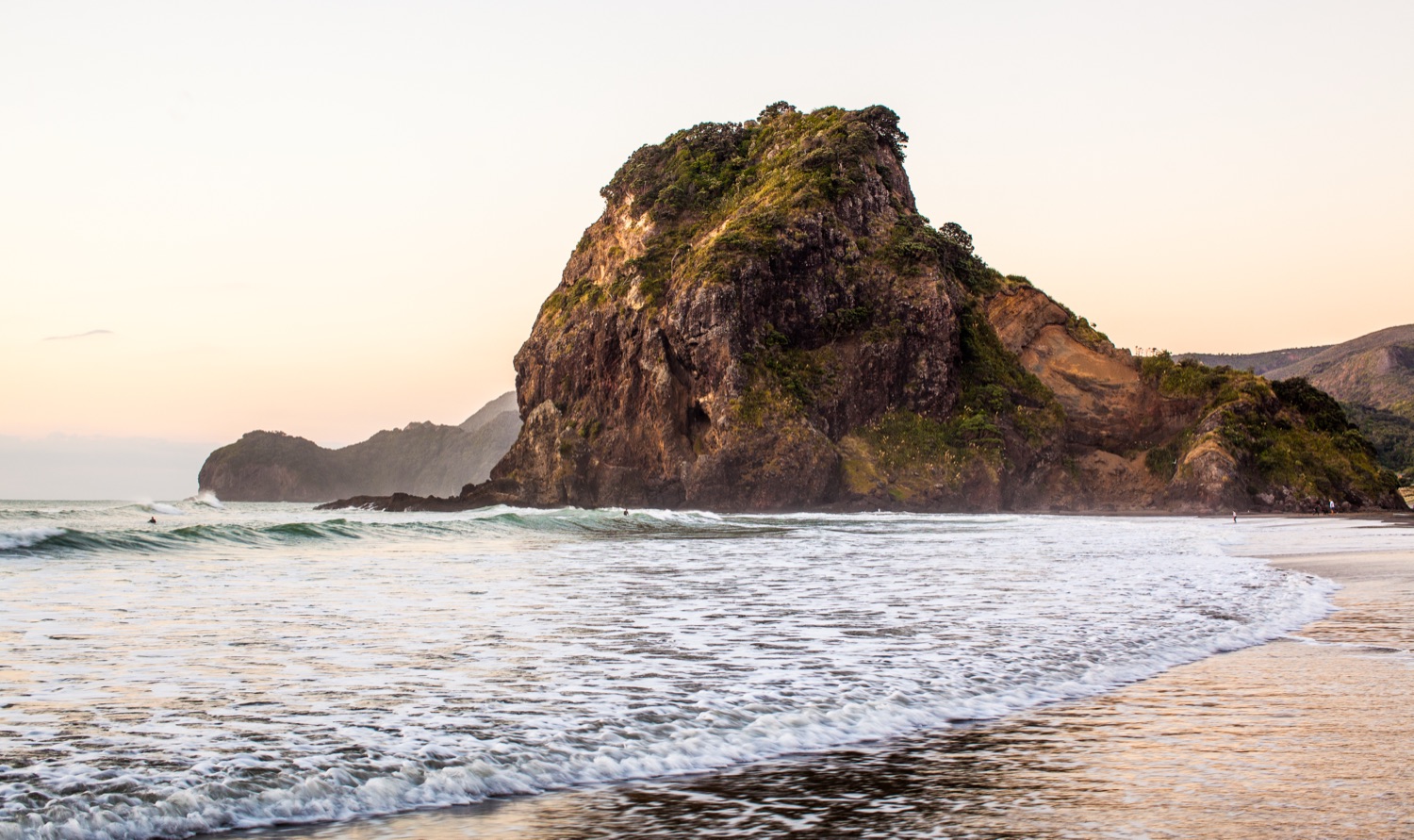
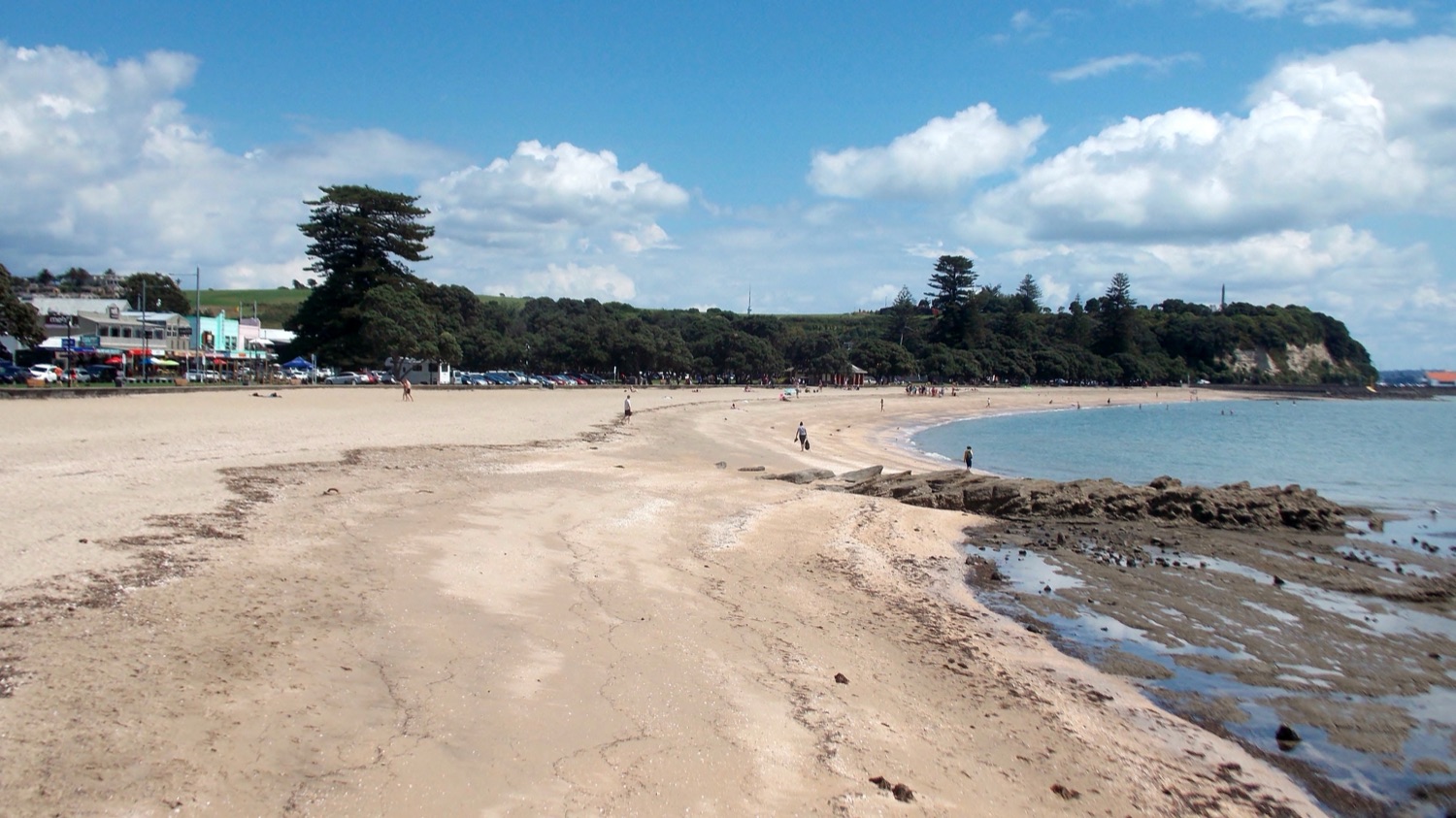
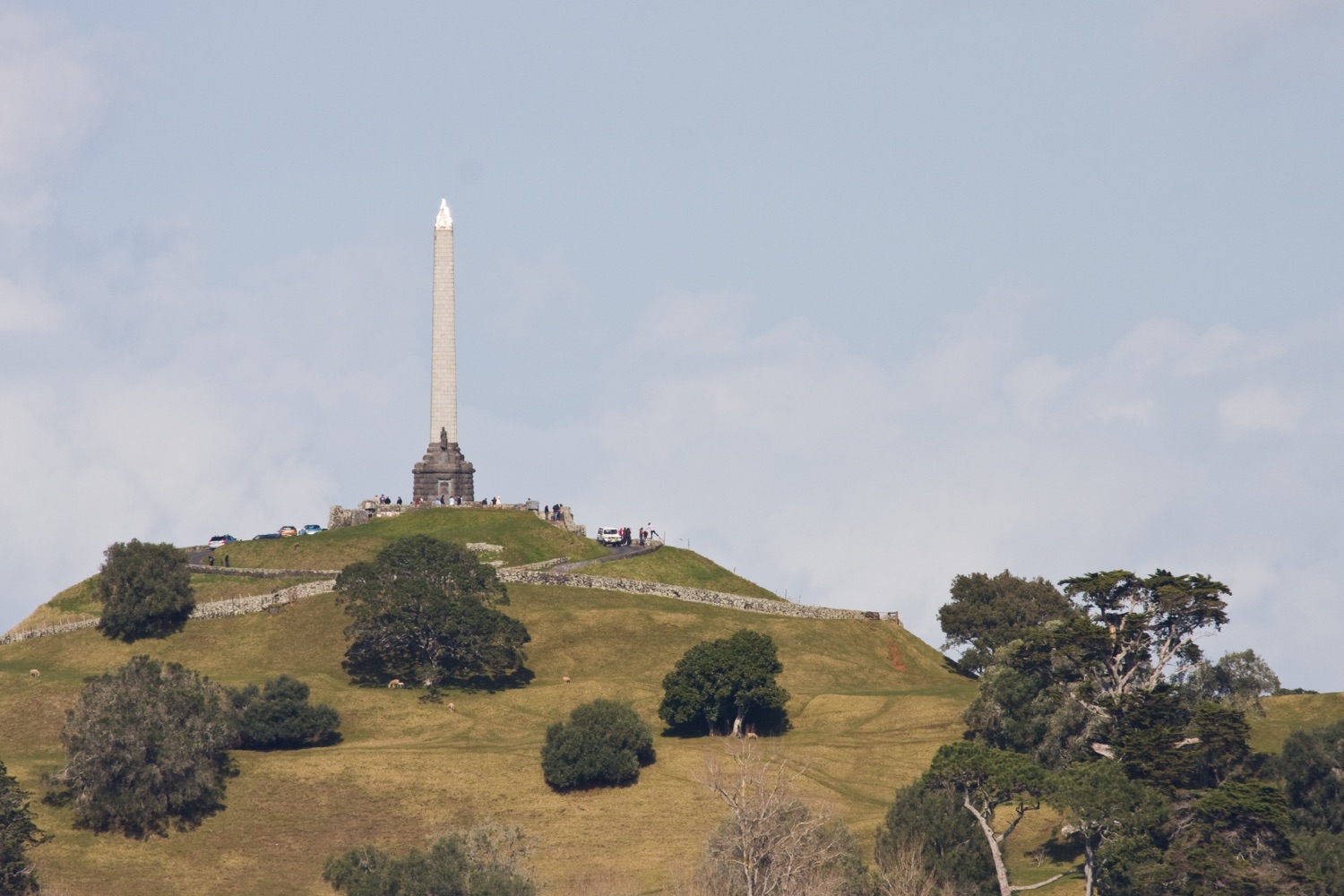
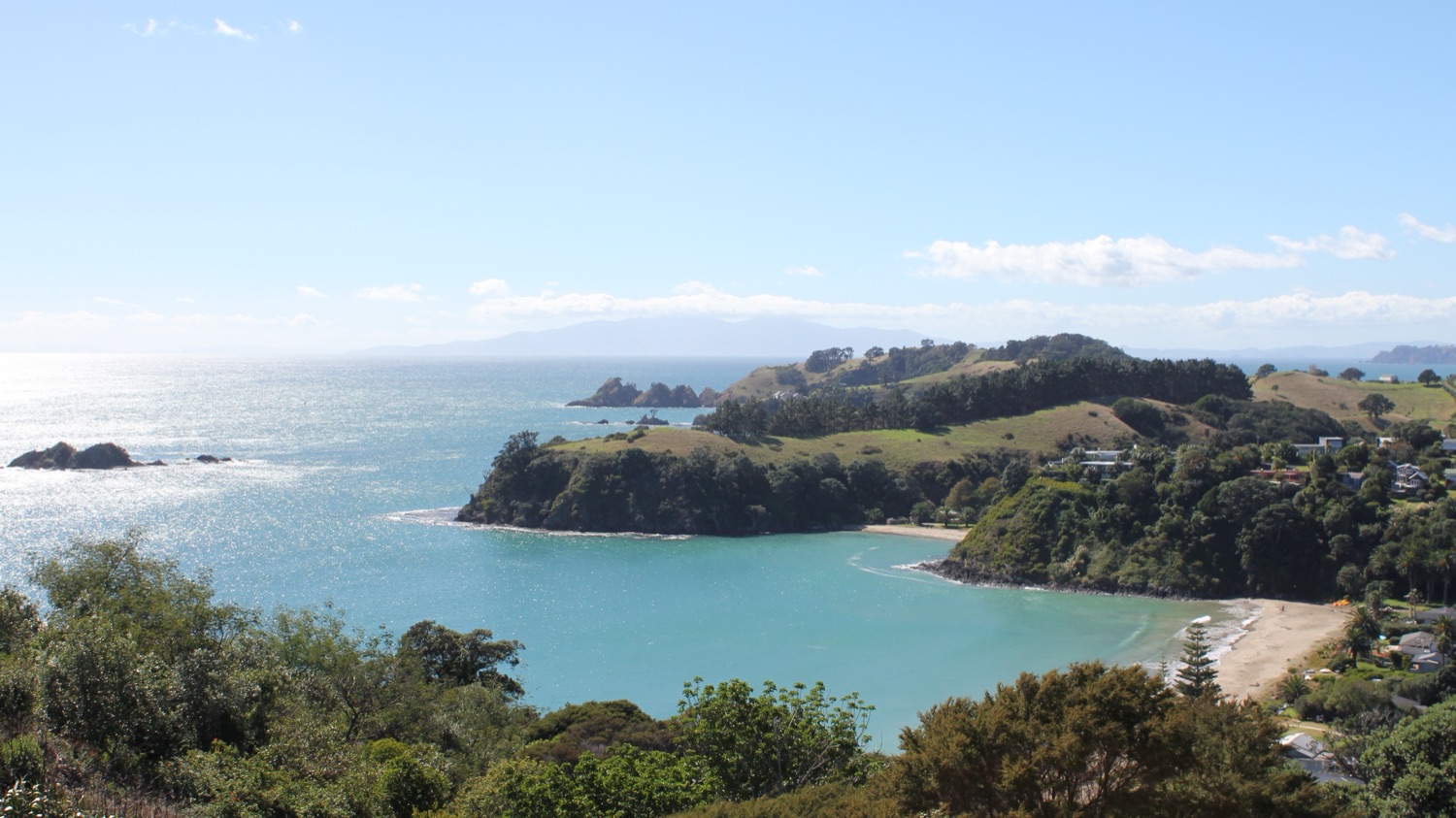
- Rangitoto Summit Track: a ferry-accessible volcanic walk through lava fields and pōhutukawa with wide Hauraki Gulf views.
- Waitākere Ranges: forest and west-coast access on tracks that are open; follow kauri protection requirements and closure notices.
- Piha, Muriwai and Karekare: powerful surf, black sand and dramatic scenery. Swim between flags and respect local conditions.
- Mission Bay and Takapuna: convenient urban beaches with cafés and family facilities; check water-quality alerts after heavy rain.
- Cornwall Park and Maungakiekie: one of the city's best everyday green spaces, with walking, heritage and wide views.
- Waiheke Island and Tiritiri Matangi: easy ferry-based escapes for beaches, vineyards, birdlife and walking.
Food and culture
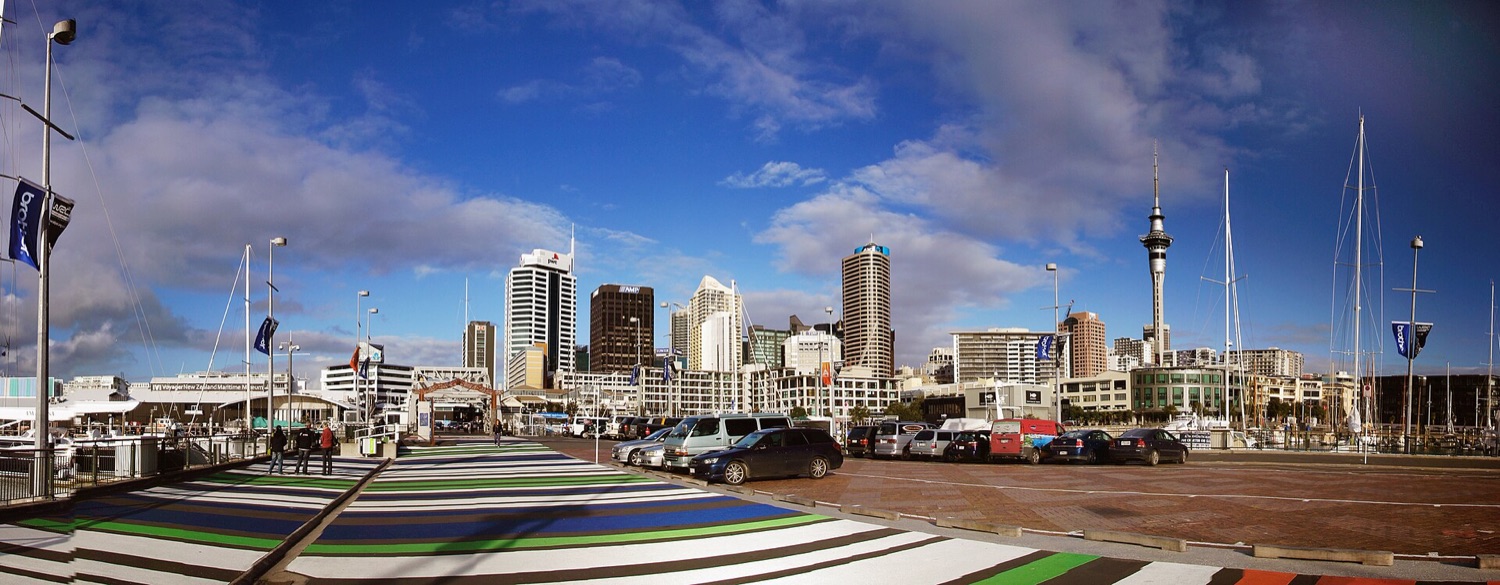
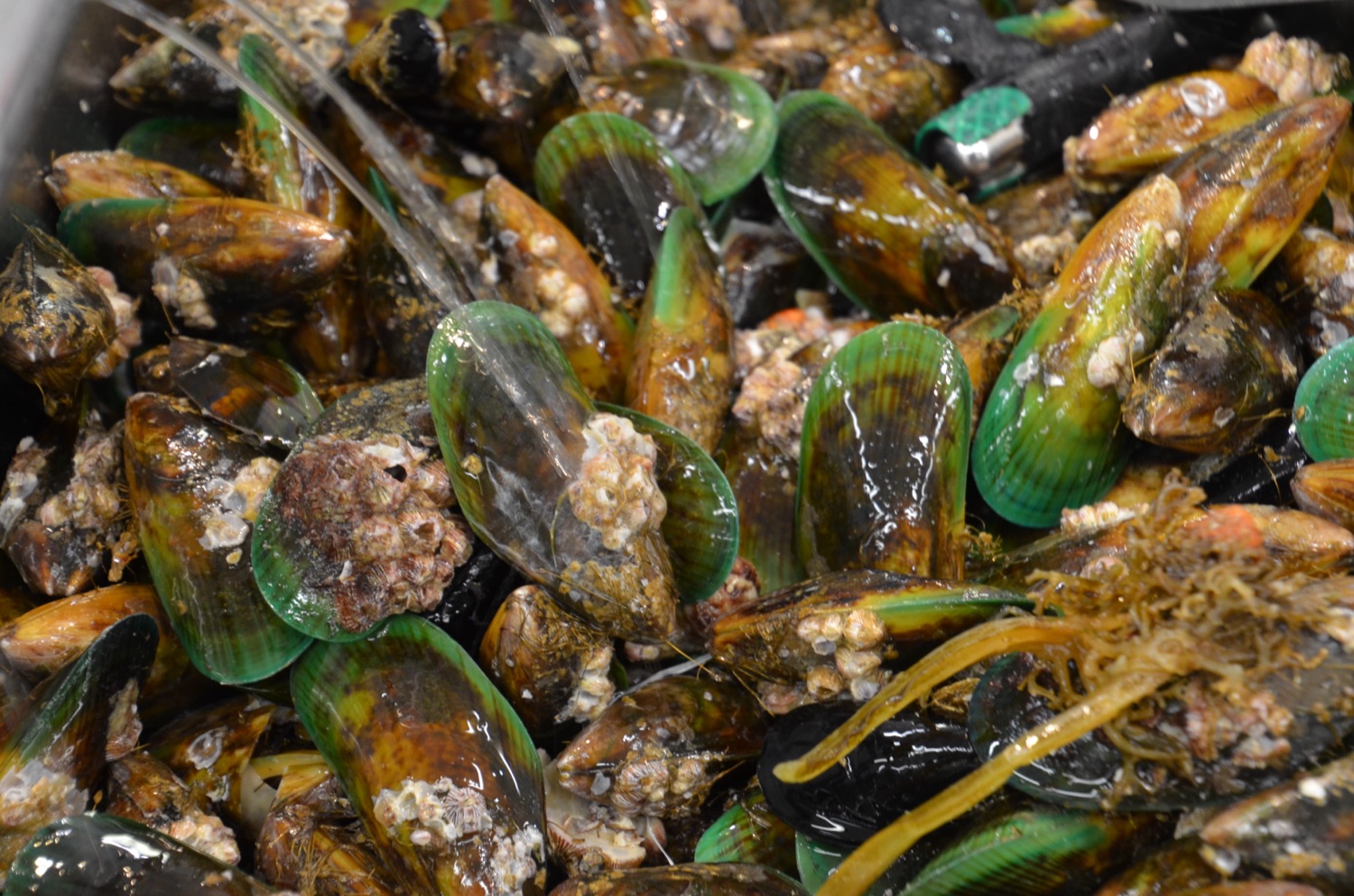
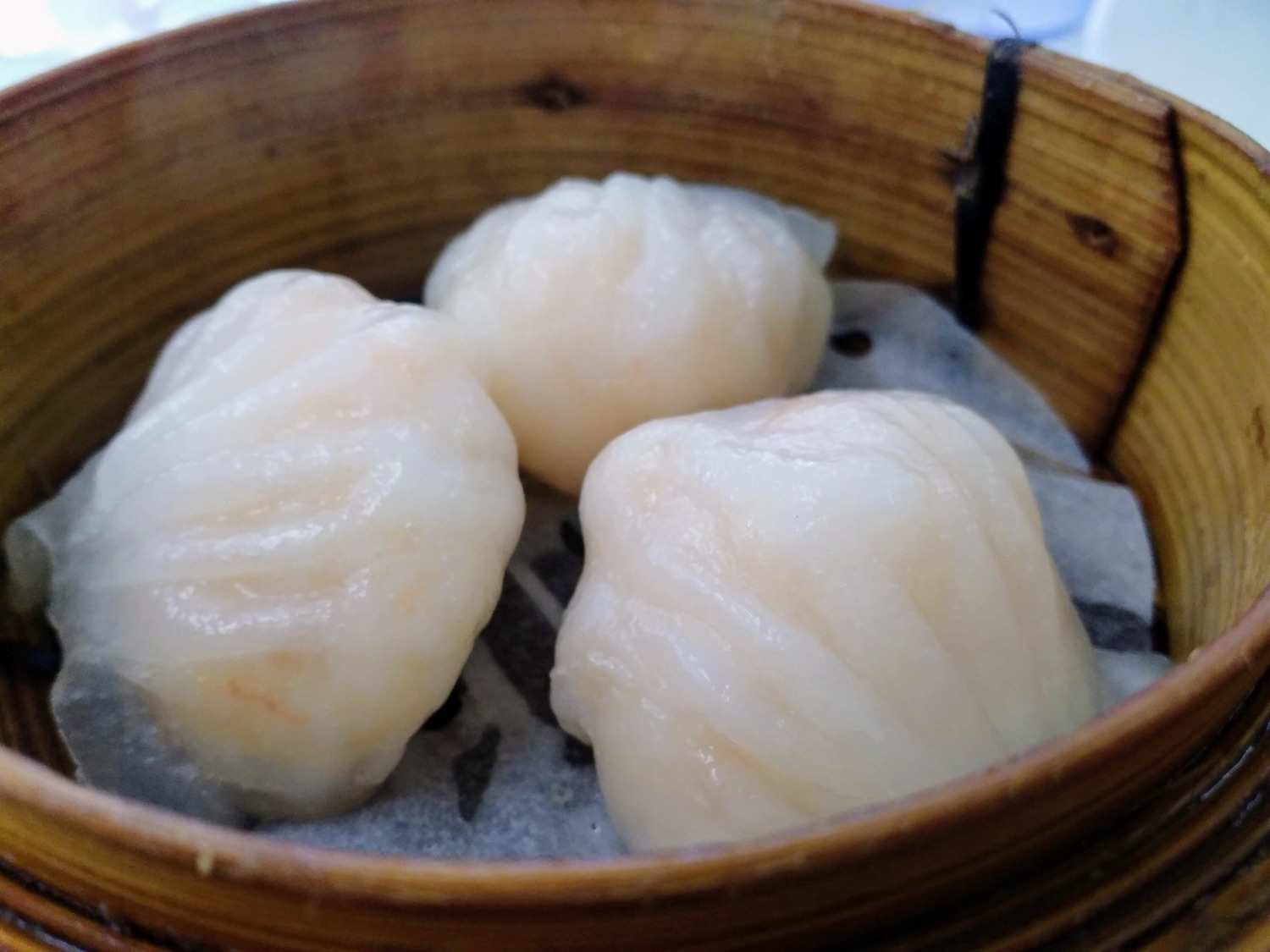
Food is one of Auckland's strongest advantages. Dominion Road and Sandringham are known for Asian and South Asian dining; Karangahape Road for independent restaurants, bars and nightlife; Ponsonby for polished neighbourhood dining; Commercial Bay and the waterfront for central convenience. The city also has the country's widest calendar of major concerts, sports, museums and community festivals.
Specific restaurants change faster than neighbourhood character. Current well-regarded examples include Ahi for modern New Zealand cooking, Baduzzi near the waterfront and Paris Butter in Herne Bay. Verify current hours, menus and ownership before publishing a fixed itinerary.

Resident anecdotes
In public discussions (the r/auckland and r/newzealand subreddits are the liveliest), residents often say Auckland works well when home, work and friends sit on compatible routes. They commonly praise its diversity, food, beaches and career choice. Traffic, rent and the difficulty of meeting friends across distant suburbs are frequent complaints. These are recurring anecdotes, not representative survey findings.
03Wellington
City position: The highest working-age income and a compact professional centre, with clear exposure to government restructuring and older housing.
Demographics
Ethnic makeup
Wellington City is less diverse than Auckland but more diverse than a simple image of a government town suggests. In the 2023 Census, 72.1% of residents identified as European, 9.8% as Māori, 5.7% as Pacific peoples, 20.4% as Asian, 3.6% as Middle Eastern, Latin American or African, and 2.1% as another ethnicity. Multiple responses are allowed, so percentages add to more than 100%.
The city has visible public-sector, university, diplomatic, arts, technology and screen communities. The central and inner-southern areas have a particularly mixed professional and student population, while the wider region adds large Māori, Pacific and migrant communities. Newcomers should distinguish Wellington City from the wider Wellington region, which includes Lower Hutt, Upper Hutt, Porirua and the Kāpiti Coast. Many people work in one council area and live in another.
At the 2023 Census, 34.4% of Wellington City's residents were born overseas (about 70,000 people), above the national average of 28.8% and the third-highest of the five cities.
Age and household profile
Wellington City's median age was 34.9 years in 2023, the youngest in this five-place comparison. About 65.6% of adults held a post-school qualification, reflecting the concentration of professional, public-sector and university work. Approximately 58.6% of households owned their home or held it in a family trust, lower than Dunedin and consistent with an expensive, renter-heavy inner city.
The demographic profile supports a lively central economy, many small households and a large weekday professional population. It also creates pressure for good-quality apartments, townhouses and rentals near frequent transport. Families can find strong neighbourhood communities, but hills, limited flat land and school-zone demand make location decisions unusually specific.
Housing and property market
Property trend
Wellington experienced a particularly strong 2020 and 2021 upswing, then one of the country's sharpest corrections as mortgage rates rose and public-sector confidence weakened. By March 2026, average values were approximately 0.2% below March 2020 and 5.0% lower than a year earlier. QV's June 2026 index showed a further 1.0% decline over the quarter.
The correction improves negotiating power but does not remove the physical issues in the housing stock. Many attractive inner suburbs contain older timber homes on steep sites. Wind exposure, retaining walls, access, insurance, earthquake strengthening and sun can be more important than a broad valuation trend. Apartments also require careful review of seismic work, body-corporate finances and long-term maintenance.
Neighbourhood and price guide
| Area | Price | Often suits |
|---|---|---|
| Te Aro, Cuba precinct and central apartments | $$ | Walkable city life, hospitality, students and professionals |
| Thorndon, Kelburn and Mt Victoria | $$$ | Government, university and central professional households |
| Newtown, Berhampore and Island Bay | $$ | Diverse communities, hospital access and independent food |
| Karori, Khandallah and Ngaio | $$$ | Families, established schools and quieter neighbourhoods |
| Johnsonville, Newlands and Tawa | $$ | More space, northern access and rail or bus connections |
| Miramar, Seatoun and eastern bays | $$$ | Screen-sector workers, airport access and coastal life |
| Lower Hutt and Porirua, wider region | $$ | Larger homes, rail commuting and regional employment hubs |
Price is relative within the city: $ = most accessible, $$$ = premium.
Wellington neighbourhood choice is three-dimensional. A house that looks close on a map may sit far above the nearest bus stop. A sheltered street can feel materially warmer than an exposed ridge. Always walk the route, check the slope and visit in ordinary wind and rain.
Transport and accessibility
Modes, costs and practical reliability
Buses
Buses run on the Metlink network and are paid with Snapper, Wellington’s prepaid tap-on, tap-off transit card, used across the region’s buses and increasingly its trains. From 15 May 2026 a three-zone peak trip is about $4.67, with a 20% off-peak discount. Coverage is extensive with strong central frequencies, though narrow streets, congestion and weather knock reliability around.
Trains
Metlink’s zone-based rail is very useful from the Hutt Valley, Porirua, Kāpiti and northern suburbs. The ageing network needs renewals, so expect occasional weekend closures and bus replacements.
Harbour ferry
A route-specific Metlink fare gets you to Eastbourne and a scenic harbour ride; reach and weather resilience are limited.
Driving
A used car (~$8k–$20k plus running costs) helps with hills, children, shift work and regional recreation, but central parking is expensive, streets are narrow, and a single corridor incident can gridlock the city.
Walking and cycling
The compact centre, waterfront and inner suburbs genuinely support a car-light routine; hills, wind, wet weather and incomplete protected routes are the barriers.
🗺️Network maps and a journey planner are at Metlink (metlink.org.nz).
The 2023 Census shows how different Wellington is from more car-oriented cities: 31.1% drove a private car to work, 16.6% used a bus, 15.6% walked or jogged, 4.1% cycled, 3.4% used a train and 18.7% worked from home. These are main-mode shares for usual travel to work, not a promise that every route is convenient.
Cash payment is being phased out across the Metlink network by March 2027. New residents should obtain or set up the correct payment method and check current fare caps and concessions. A regional rail commute can be reliable and productive, but allow for scheduled renewal closures.
Planned upgrades
Greater Wellington's regional public transport plan prioritises higher-capacity buses, bus-priority corridors, rail renewals and integrated payment. Route 2 is one focus for larger-capacity vehicles. New Tūhono trains for the Wairarapa and Manawatū corridors are expected from 2028 or 2029, subject to delivery and programme timing.
These improvements are meaningful, but much of Wellington's current transport work involves maintenance. Check planned rail closures and bus replacements if a property decision depends on a specific line. Proposed rapid-transit or road projects should not be included in a household budget until funding, scope and completion are clear.
Employment
Key industries and example jobs
The Wellington Regional Economic Development Plan (2022–2032) prioritises four sectors: screen and gaming; science, technology, engineering and high-value manufacturing; food and fibre; and tourism. The tech ambition is explicit, 30,000 new tech jobs across the region by 2035, with Wellington positioning itself as a climate-tech leader. Central government and the public service remain the city's economic backbone underneath all of that.
| Industry | Example jobs | What is changing | Practical note |
|---|---|---|---|
| Government and policy | Policy analyst, adviser, economist, regulator, communications specialist, programme manager | Fiscal restraint, service redesign, data capability and regulatory delivery | Hiring can change quickly after budgets, elections and agency restructures |
| Professional services | Lawyer, consultant, accountant, auditor, risk adviser, recruiter | Public-sector transformation, infrastructure, climate and digital advisory | Demand often follows government programmes and major projects |
| Technology and digital | Software engineer, business analyst, product manager, cybersecurity specialist, data scientist | Cloud modernisation, public digital services, AI and cyber resilience | Contractors can earn more but face sharper project-cycle risk |
| Science and research | Environmental scientist, geospatial analyst, researcher, laboratory specialist | Climate adaptation, hazards, conservation, health and advanced research | Crown research and university changes can affect the employer landscape |
| Screen and creative | Visual-effects artist, producer, editor, animator, game developer, designer | International production, virtual production and interactive media | Portfolio strength matters; work can be contract-based and network-driven |
| Health and education | Nurse, allied-health professional, teacher, lecturer, administrator | Aging population, specialist care and workforce replacement | Registration and local experience may be required |
Wellington's economy is built around government and the services that support it. That creates high-value knowledge work but also concentration risk. A couple employed by two government-linked organisations may be less diversified than their job titles suggest.
Income trend and wage outlook
This report uses about $80,000 gross annually as a planning benchmark. Stats NZ recorded median total personal income of $80,500 for residents aged 30-64 in 2023, up from $62,800 in 2018 and $55,700 in 2013. It is the highest historical figure in this comparison, consistent with Wellington's professional and public-sector mix.
The near-term outlook is cautious. Public administration and safety accounted for 19.4% of employed Wellington City residents in 2023, while professional, scientific and technical services accounted for 15.7% and information media and telecommunications 3.5%. The national Public Service workforce fell from 65,699 FTE in December 2023 to 62,654 in June 2025, then partly recovered to 63,162 in September 2025. The cuts were therefore material, but the decline had stopped by late 2025.
Technology can soften the effect, not replace it cleanly. Wellington has real capability in software, cybersecurity, data, AI, govtech, screen and digital services. However, many of those firms sell to government, and Public Service reductions also affected information professionals and contractors. Current evidence supports selective hiring in cyber, data, regulation, health technology and export-focused products. It does not support assuming that private technology jobs will absorb public-sector losses one for one.
Education
Universities and tertiary study
Wellington's universities lean into the capital's strengths. Victoria University of Wellington (Te Herenga Waka) is nationally known for law, government and public policy, the humanities, architecture and design, and the sciences, helped by being next door to Parliament and the public service. Massey University's Wellington campus is a hub for creative arts, design and communication, while WelTec and Whitireia cover applied and vocational training in trades, IT, health and creative fields.
Students need to budget for steep walking, bus travel and older rental housing. North Kelburn, central Te Aro and the wider region offer very different campus routines. Confirm which campus hosts the actual programme rather than assuming all courses are central.
Lifestyle, climate and recreation
Climate and daily rhythm
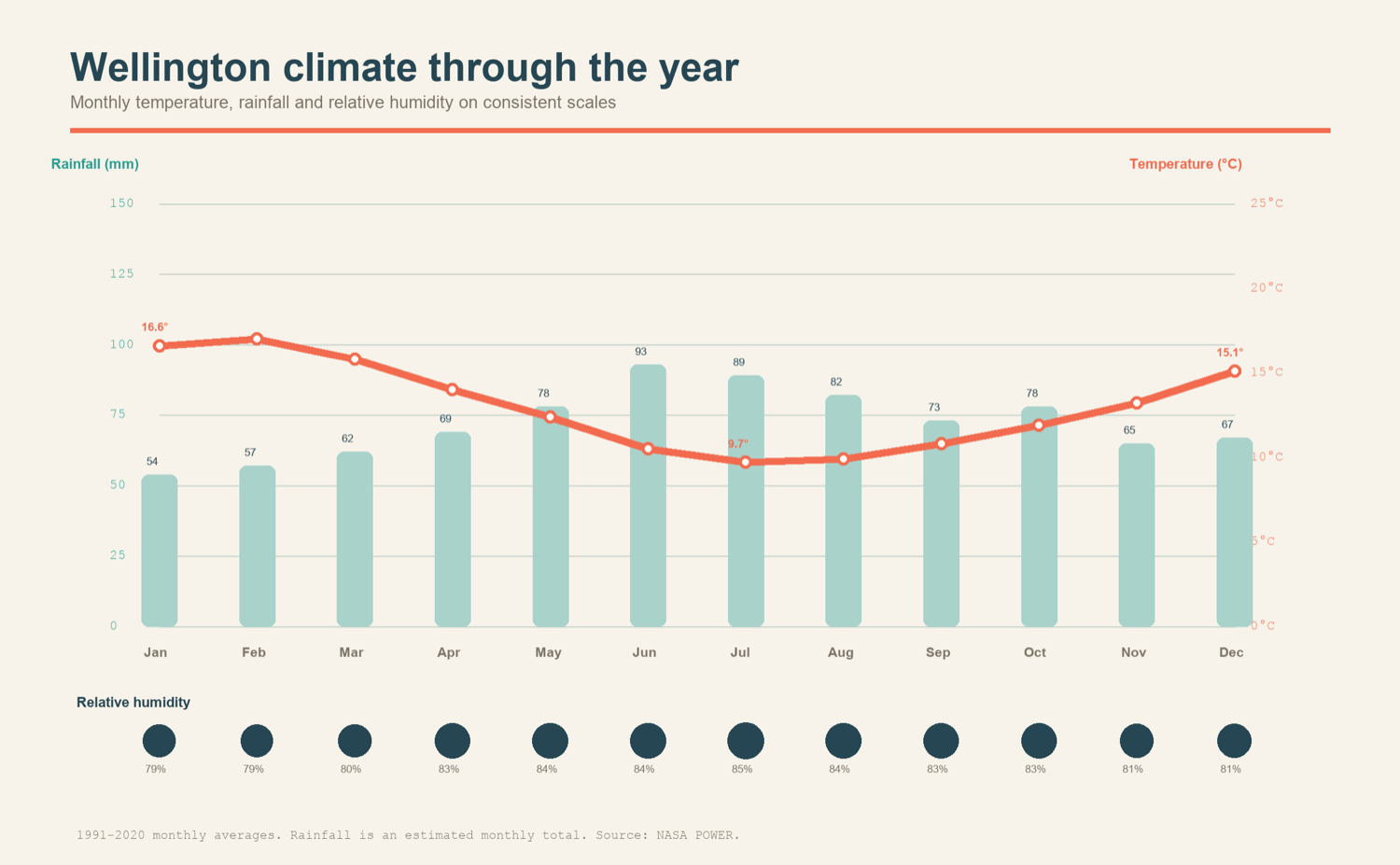
Wellington is mild by temperature but often feels colder because of wind and exposure. Weather can change rapidly. A sheltered, sunny home can feel substantially better than an exposed property only a few streets away. The compact centre supports a strong walking culture: the waterfront, Te Aro, Cuba Street, Lambton Quarter and inner suburbs can form one connected routine.
Outdoors and attractions
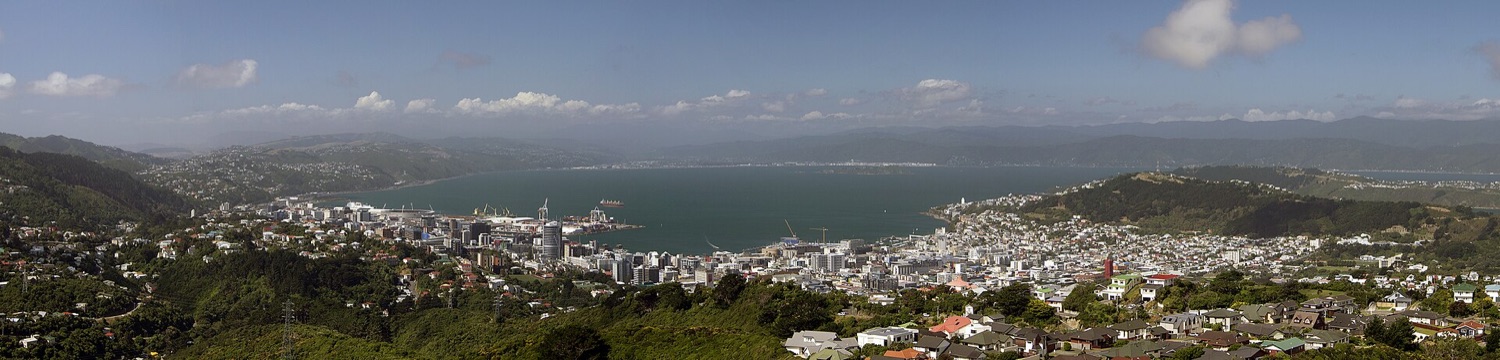
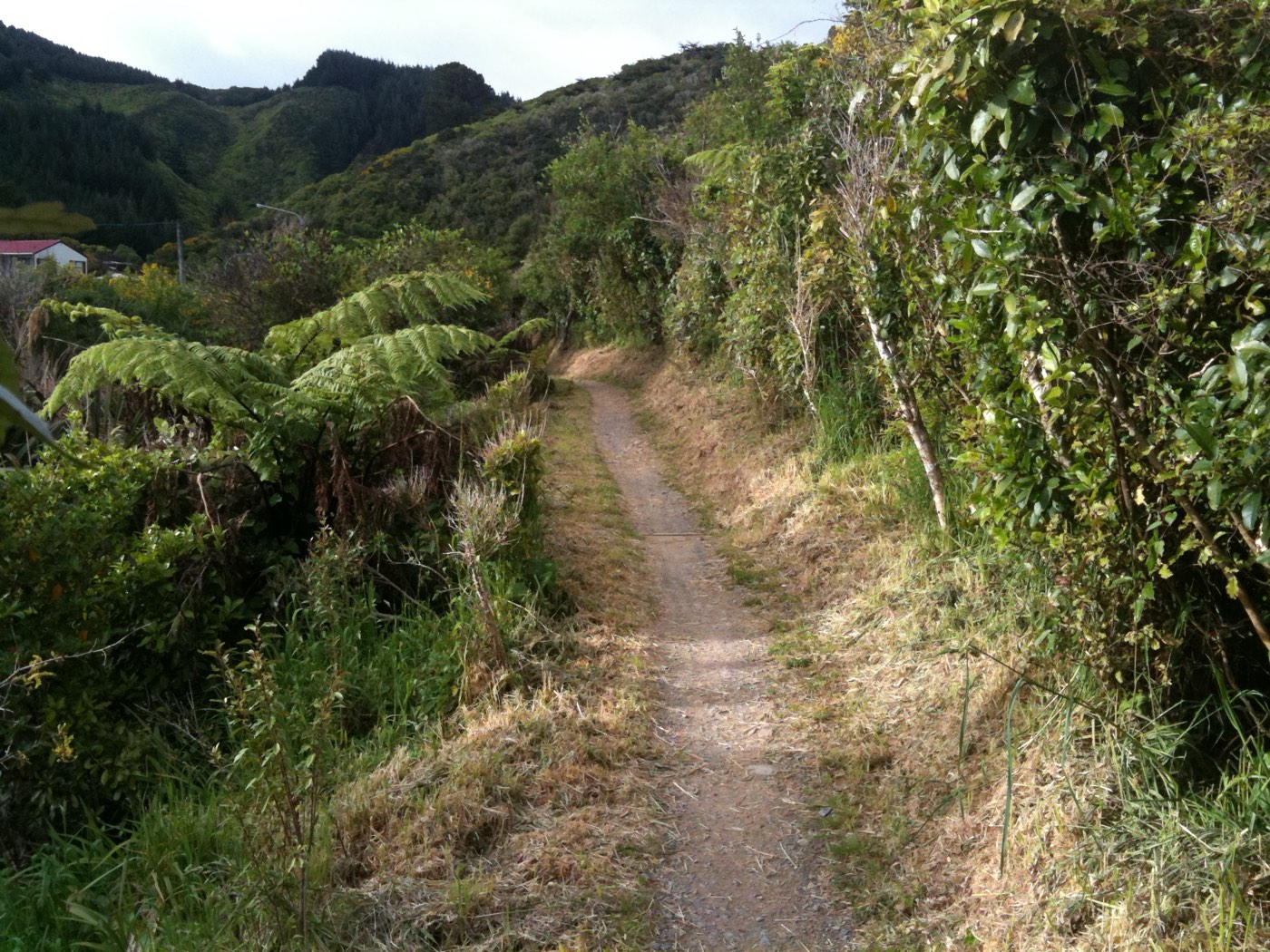
- Mount Victoria Lookout and Town Belt: close-to-city walking and broad harbour views.
- Red Rocks and the south coast: rugged shoreline, wildlife and exposed coastal walking.
- Makara Peak Mountain Bike Park: a major trail network with views over Cook Strait.
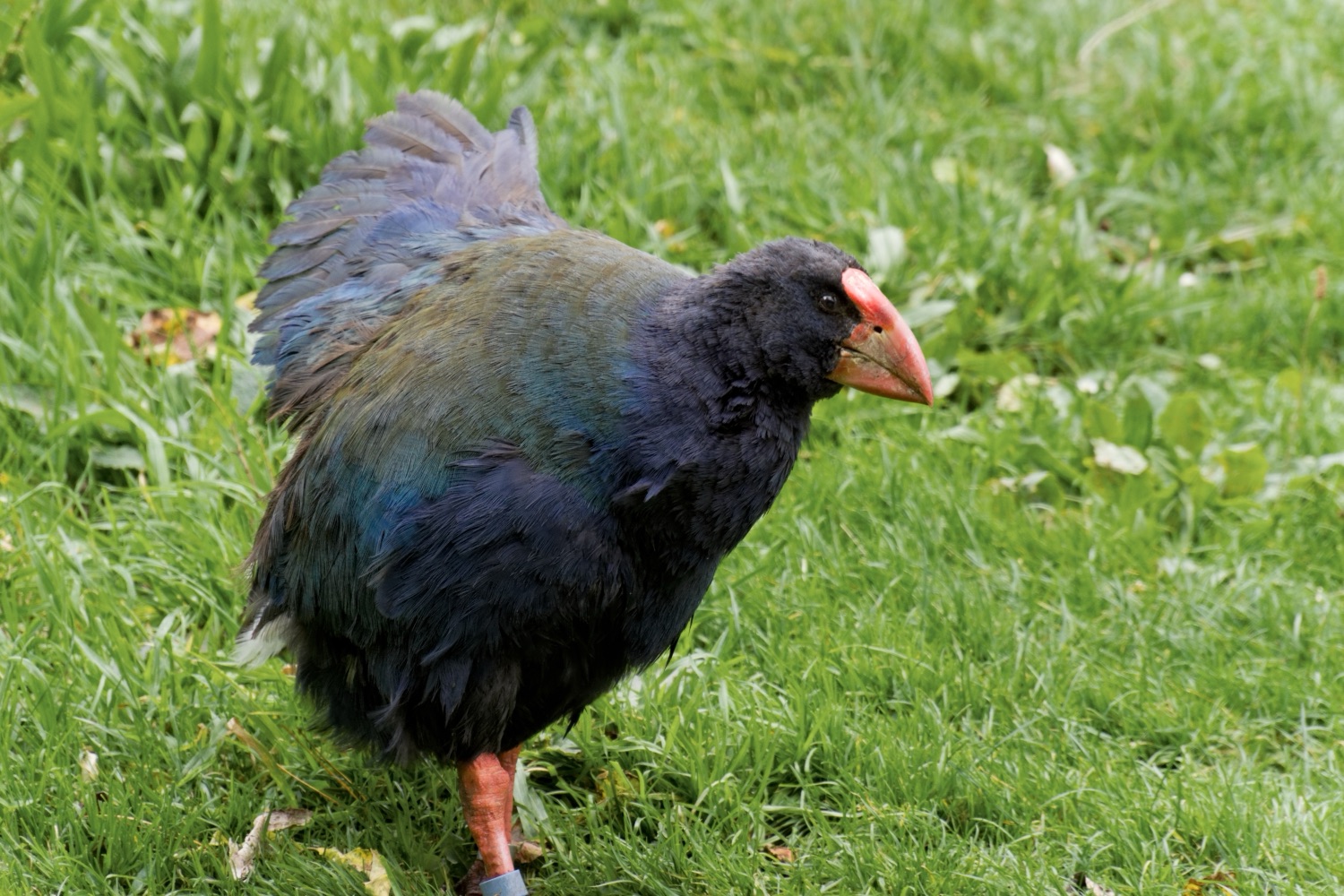
- Zealandia Te Māra a Tāne: an urban ecosanctuary that makes native wildlife accessible close to the centre.
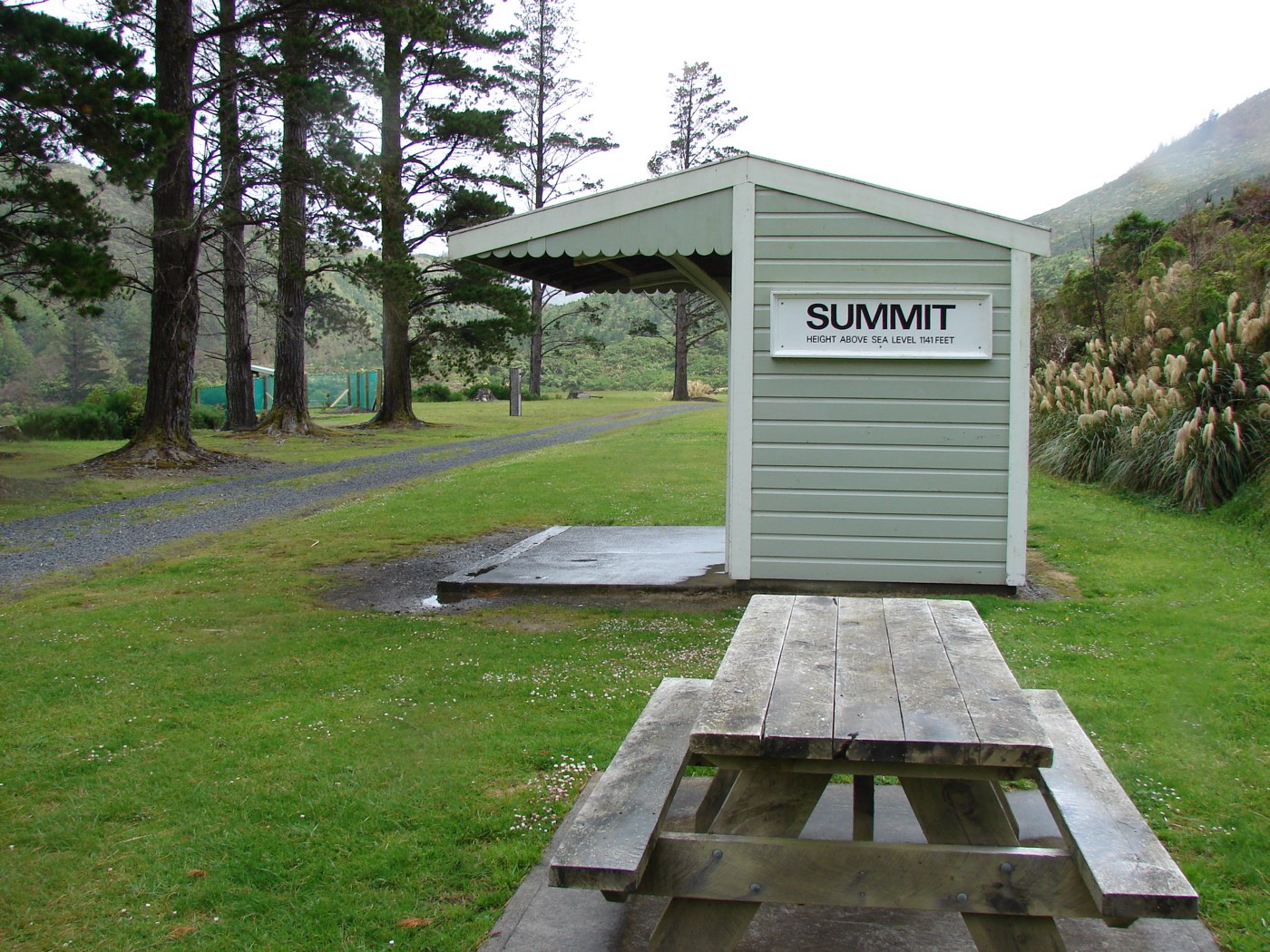
- Remutaka Cycle Trail: a longer regional ride through valleys, rail heritage and coast.
- Kāpiti Coast and Wairarapa: regional day or weekend trips for beaches, wine, food and open landscapes.


Food and culture
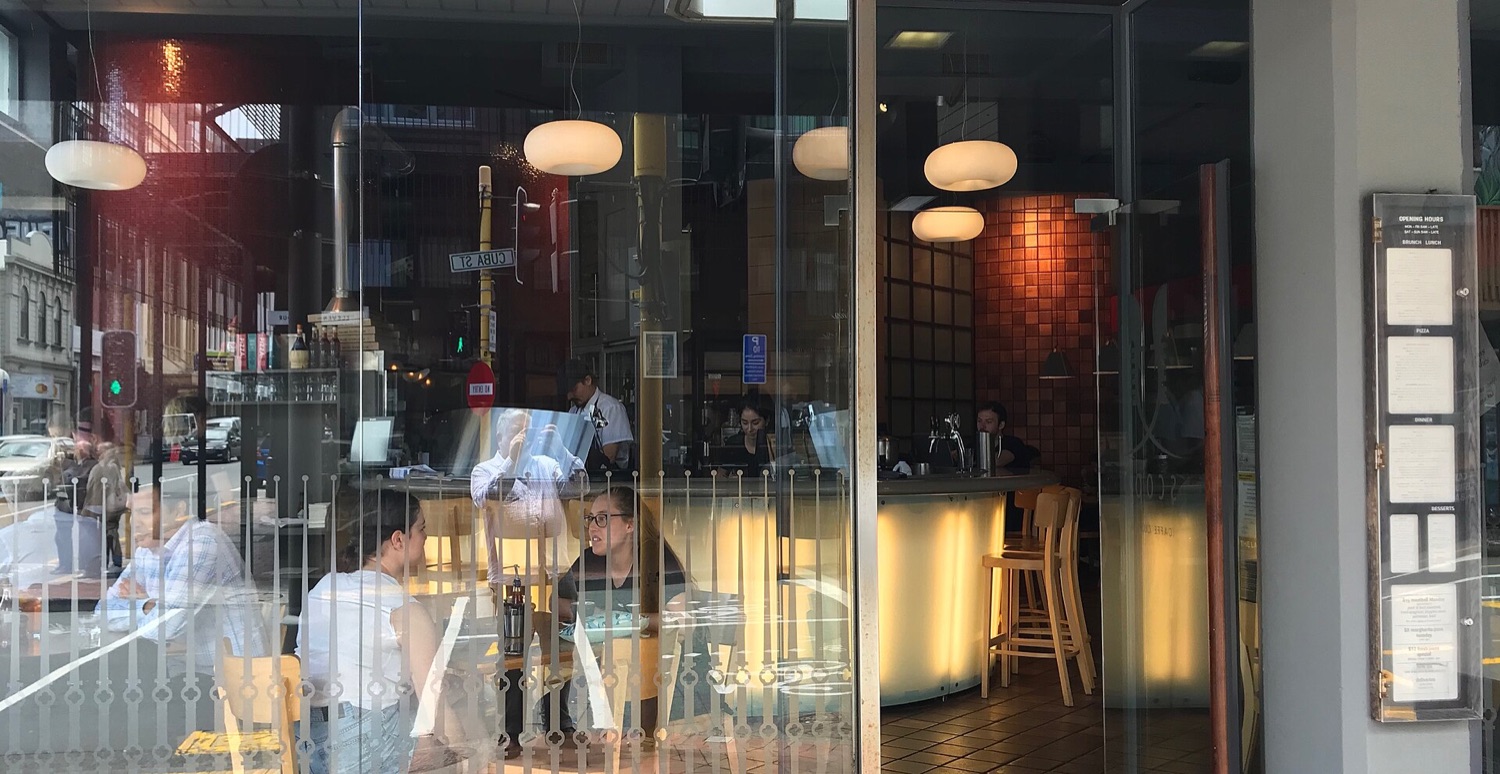
Wellington's cultural strength is concentration rather than size. Cuba Street and Te Aro combine cafés, bars, theatres, independent retail and restaurants; Newtown is strong for diverse casual food; the waterfront brings museums, galleries and festivals into an easy central circuit. The city is particularly good for coffee, craft beer, theatre, film and small live venues.
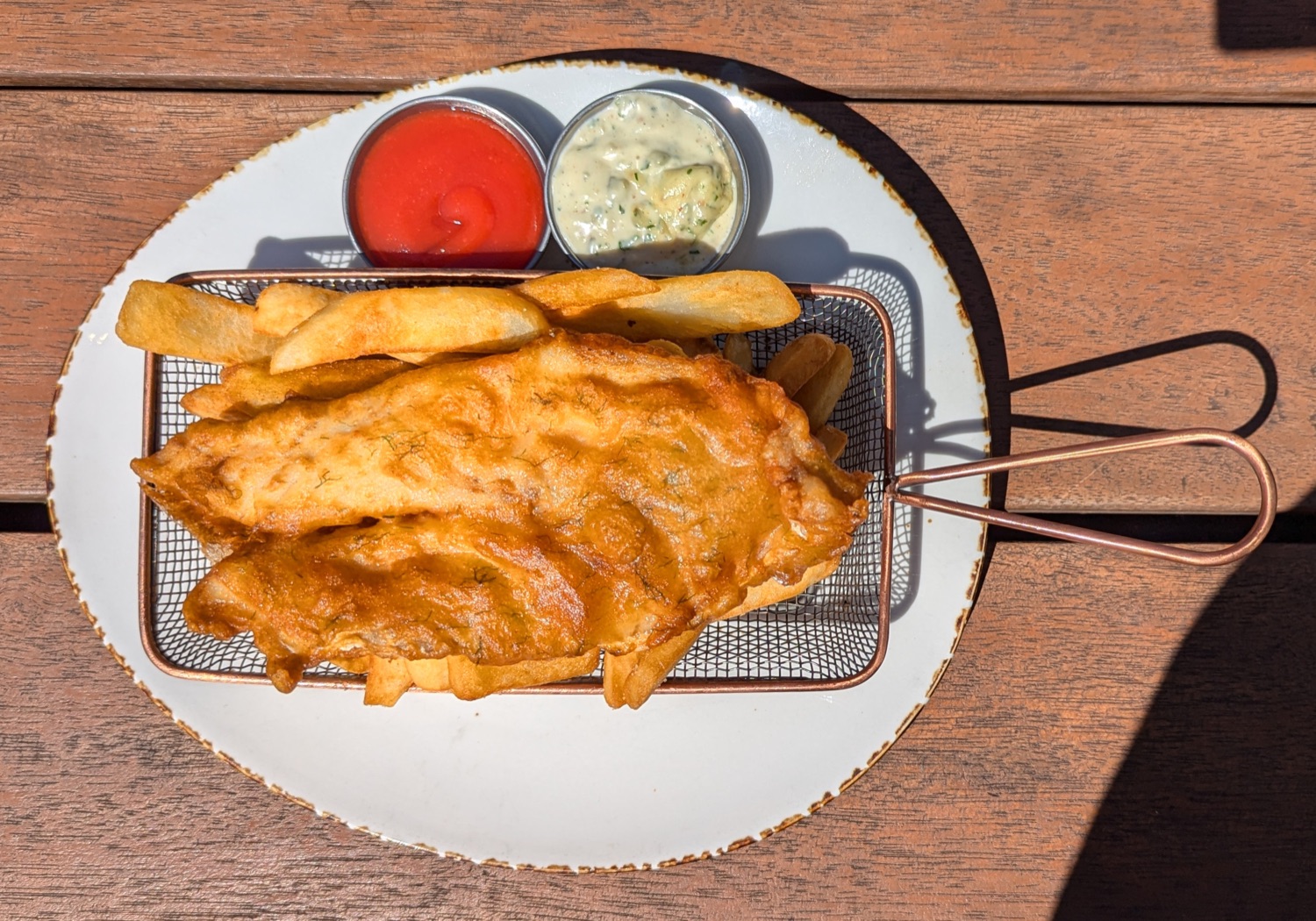
Current well-regarded dining examples include Ortega Fish Shack, Rita and Kisa. Specific venues change, but the wider habit of small, chef-led neighbourhood restaurants is durable. Check current opening days because many kitchens close early in the week.

Resident anecdotes
In public discussions (the r/Wellington and r/newzealand subreddits are the liveliest), residents often praise the ability to walk between work, culture, harbour and friends. Wind, damp rentals, public-sector uncertainty and reduced late-night activity are common criticisms. Some people accept the weather because they value the compact centre and community. Others leave for more housing space, warmer winters or a broader private-sector market. These are anecdotes, not representative survey findings.
04Christchurch
City position: A relatively affordable, flat and still-developing city with a broad technical economy and easy access to coast and mountains.
Demographics
Ethnic makeup
In the 2023 Census, 75.9% of Christchurch City residents identified as European, 11.2% as Māori, 4.3% as Pacific peoples, 17.1% as Asian, 1.9% as Middle Eastern, Latin American or African, and 1.1% as another ethnicity. Multiple responses are permitted, so the categories add to more than 100%.
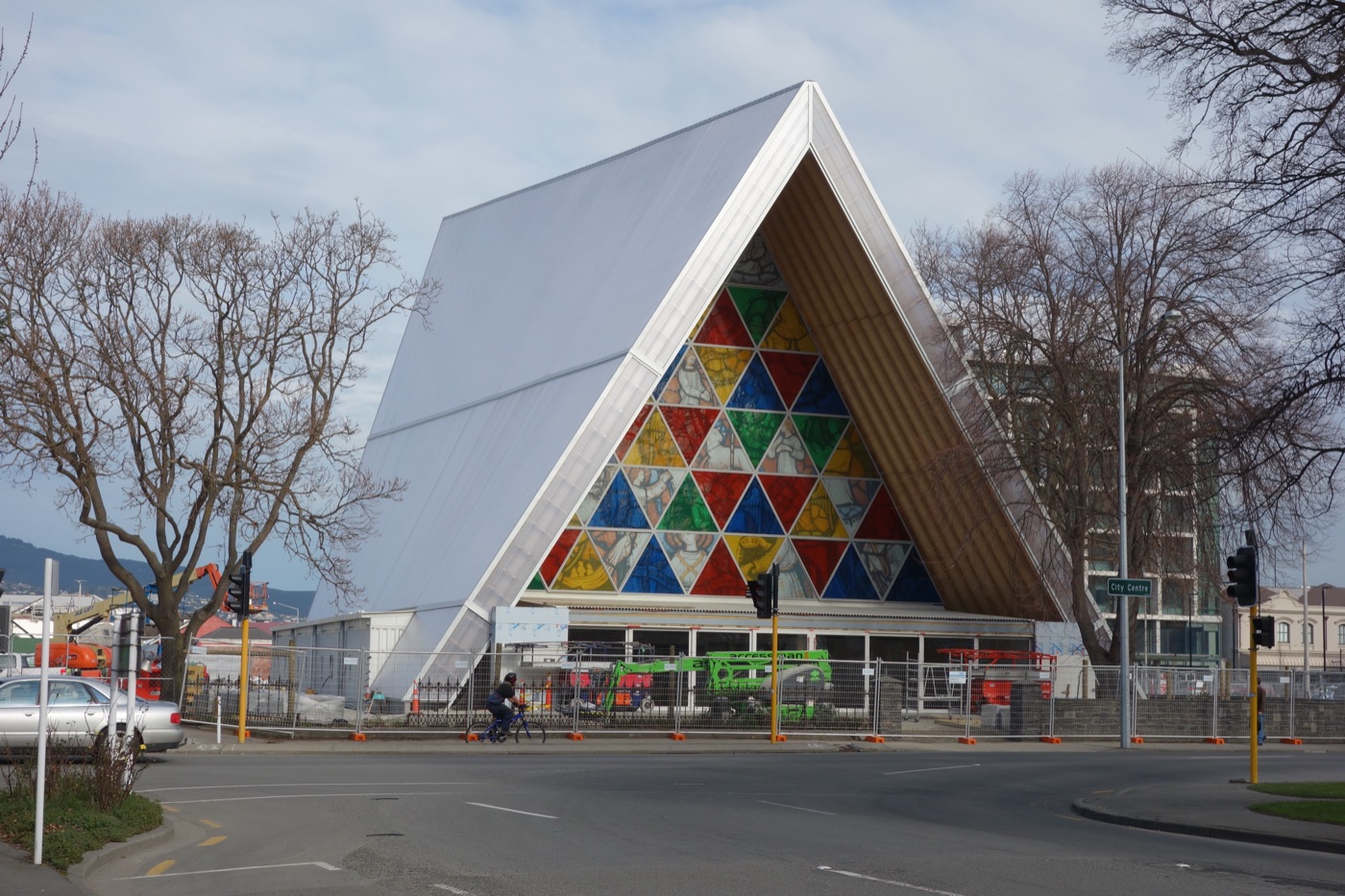
Christchurch remains less diverse than Auckland, but the population has changed materially through migration, post-earthquake rebuilding and growth in technology, health, education and construction. Asian communities have expanded, and the city's bicultural identity is increasingly visible through Ngāi Tahu partnerships, public spaces and the central-city rebuild.
At the 2023 Census, 27.8% of Christchurch City's residents were born overseas (about 109,000 people), a little below the national average of 28.8%.
Age and household profile
The median age was 37.5 years in 2023. Christchurch had about 100,563 families and 149,442 households at the census, and an estimated population of approximately 419,200 in June 2025. The profile is slightly older and more family-oriented than Auckland or Wellington, with a large suburban housing stock and significant growth to the southwest, northwest and neighbouring Selwyn and Waimakariri districts.
This can suit households seeking bedrooms, a garden and easier access to schools or sports facilities. The trade-off is a more dispersed daily life. A household may live outside the city boundary, work near the airport and socialise in the centre, making a car or carefully chosen bus route valuable.
Housing and property market
Property trend
Christchurch entered the pandemic with lower prices than Auckland and Wellington, then experienced stronger sustained growth. QV reported an average value of approximately $799,000 in March 2026, about 55% above March 2020 and 3.1% higher than a year earlier. June 2026 data showed a further 0.9% rise over the quarter.
The increase reflects relative affordability, population growth, modern replacement housing and demand from buyers priced out of larger markets. Christchurch is less affordable than it was five years earlier. Newer townhouses and growth areas add supply, while established family suburbs, school zones and land remain competitive.
Neighbourhood and price guide
| Area | Price | Often suits |
|---|---|---|
| CBD, Riverside and inner east | $$ | Walkable apartment or townhouse living and central professionals |
| Merivale, Fendalton and Strowan | $$$ | Established schools, large homes and central-northwest access |
| Riccarton, Ilam and Upper Riccarton | $$ | University, retail, students and migrant households |
| Addington, Sydenham and Spreydon | $ | Central access, first-home buyers and Addington employment |
| Halswell, Wigram and southwest growth areas | $$ | Families seeking newer housing, parks and schools |
| Cashmere, Huntsbury and St Martins | $$$ | Hills, views, trails and established families |
| New Brighton, Southshore, Aranui and parts of Linwood | $ | Beach access, community, first-home budgets and east-side amenities |
| Rangiora, Kaiapoi and Rolleston, wider region | $$ | Newer family homes and more land |
Price is relative within the city: $ = most accessible, $$$ = premium.
Newcomers sometimes hear that the east is unsafe and the west is wealthy. That is too crude to be useful. Deprivation, earthquake damage, social housing, investment and recorded victimisation do vary across the city, but so do strong communities, renovated pockets and high-demand coastal streets. Compare exact streets, property condition, travel patterns and Police data rather than using a compass direction as a verdict.
Transport and accessibility
Modes, costs and practical reliability
Buses
Buses use the Metrocard, Christchurch’s prepaid card, where you tap on when boarding but there’s no tap-off because the fare is a single flat rate, or a contactless bank card, at a simple flat fare of about $3.00 (about $1.50 with a Community Services or child card). Coverage is broad with improving real-time information, but many routes are slower than driving and orbital trips can need a central transfer.
Ferry
A small ferry to Diamond Harbour (about $5.00 adult) is a pleasant commute for a limited catchment, weather permitting.
Driving
A used car (~$8k–$20k plus running costs) reaches dispersed suburbs, industrial jobs, ski fields and regional trips easily. The flip side: peak corridors congest, and heavy car dependence can eat into the housing-cost advantage.
Cycling
Flat terrain and a growing separated-cycleway network make cycling a real option for many central trips; cold mornings, easterly weather and network gaps put off less confident riders.
Walking
The central city and inner suburbs are increasingly walkable, but the wider footprint is too spread out for walking to replace most trips.
🗺️Route maps and timetables are at Metro (metroinfo.co.nz).
In the 2023 Census, 58.8% drove a private car to work, 10.0% used a company vehicle, 6.0% cycled, 4.0% used a bus, 3.6% walked or jogged and 13.0% worked from home. The city is physically suited to cycling, but employment and housing are dispersed. The practical choice is often one car per household plus cycling or buses for selected trips.
Planned upgrades
Greater Christchurch planning aims to develop core public-transport routes with more frequent service, bus priority and better interchange. The long-term direction includes protecting a future mass rapid transit corridor, but this is staged planning rather than a near-term promise of urban rail.
Current work includes bus-priority improvements on corridors such as Main South Road and continued development of cycling connections. A renter or buyer should make decisions using today's service, then treat future upgrades as potential upside.
Employment
Key industries and example jobs
ChristchurchNZ is building the region's future around five growth sectors: aerospace and future transport (a strategy to make Canterbury a global aerospace leader by 2035), health tech, food, fibre and agritech (Canterbury is New Zealand's largest agricultural region), and hi-tech. These sit alongside the construction, health and manufacturing base that already drives day-to-day employment.
| Industry | Example jobs | What is changing | Practical note |
|---|---|---|---|
| Aerospace and advanced engineering | Mechanical engineer, avionics technician, composite specialist, test engineer, regulatory or quality specialist | Small-satellite, propulsion, uncrewed aircraft, advanced materials and precision manufacturing | A genuine emerging strength, but the cluster is much smaller than a mass employment sector |
| Technology and electronics | Software engineer, embedded systems developer, geospatial analyst, product manager, cybersecurity specialist | Agritech, health technology, location intelligence, electronics and export software | Networks are smaller than Auckland but can be highly specialised |
| Manufacturing and food | Production engineer, maintenance technician, food technologist, quality manager, supply planner | Automation, export food, low-emissions production and advanced manufacturing | Jobs cluster around Hornby, Wigram, airport and regional industrial areas |
| Construction and infrastructure | Civil engineer, quantity surveyor, site manager, planner, electrician, plumber | Housing growth, transport, water reform and resilience investment | Project cycles affect hiring; local licensing and safety tickets can be important |
| Health and education | Nurse, allied-health professional, doctor, teacher, lecturer, laboratory specialist | Hospital redevelopment, aging population, university and vocational training | Large stable employers, although registration and funding cycles matter |
| Agritech and primary-sector services | Agricultural scientist, farm systems analyst, irrigation specialist, food researcher, rural banker | Precision agriculture, water efficiency, genetics, emissions reduction and food innovation | City and regional employment are closely linked |
| Logistics and aviation | Supply-chain planner, freight coordinator, warehouse manager, aircraft engineer, airport operations | South Island distribution, e-commerce, tourism and export resilience | Airport and industrial corridors suit car-based or shift workers |
Christchurch's economy is not built on one post-earthquake construction boom. Engineering, manufacturing, technology, health, food and logistics now form a broader base. Aerospace is an exciting differentiator, but candidates should identify actual employers and role volumes rather than moving on the strength of the label alone.
Income trend and wage outlook
This report uses about $70,000 gross annually as a planning benchmark. Stats NZ recorded median total personal income of $56,600 for residents aged 30-64 in 2023, up from $46,000 in 2018 and $41,100 in 2013. The percentage increase was lower than the other four locations, but the housing-cost relationship has historically been more favourable.
Near-term demand is clearest in engineering, infrastructure, manufacturing, health, agritech and logistics. Technology hiring is slower than during the pandemic boom. Christchurch can suit specialists who bring technical depth and are willing to work across smaller teams.
Education
Universities and tertiary study
The University of Canterbury is the city's main university and is strongest in engineering, its Civil and Structural Engineering sits in the world's top 100 (and among the very top globally for civil), alongside the sciences and well-regarded geography, linguistics and business programmes. Lincoln University, just south of the city, is New Zealand's specialist land-based university: agriculture, environment, food and related business. Ara Institute of Canterbury covers applied and vocational training across trades, technology, health, hospitality, creative industries and business, with work placements built into most of its 150-plus programmes.
This mix links education to local jobs in engineering, construction, food, agriculture and health. Students should confirm campus, programme delivery and transport. Lincoln is outside the central city and suits a different residential pattern from the University of Canterbury or Ara.
Lifestyle, climate and recreation
Climate and daily rhythm
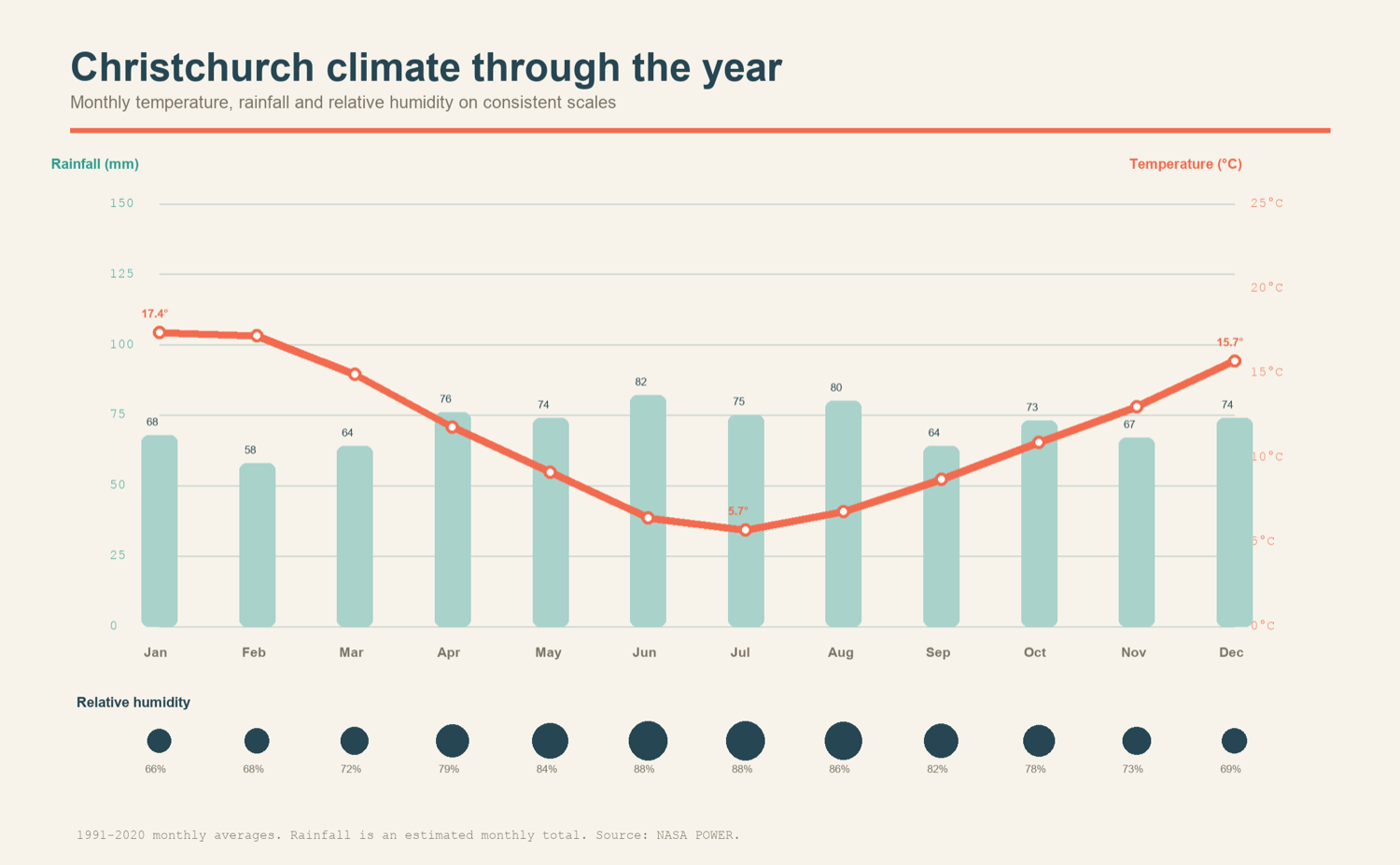
Christchurch is sunnier and drier than many newcomers expect, with warm summer days, frosty winter mornings and clear seasonal change. Nor'west winds can bring sudden heat, while winter inversion conditions affect air quality. A sunny, well-insulated home can be very comfortable; a shaded property can still feel cold.
Daily life is spacious and practical. Errands, schools and sports are often easy by car, and the flat landscape supports cycling. The rebuilt central city has become more active, but much of Christchurch life still revolves around suburban centres and weekend access to the wider South Island.
Outdoors and attractions
- Port Hills: Rapaki Track, Bridle Path, Harry Ell Track and the Crater Rim offer accessible walking and mountain biking close to the city.
- Godley Head and Taylors Mistake: coastal tracks, cliffs, beach access and military history.
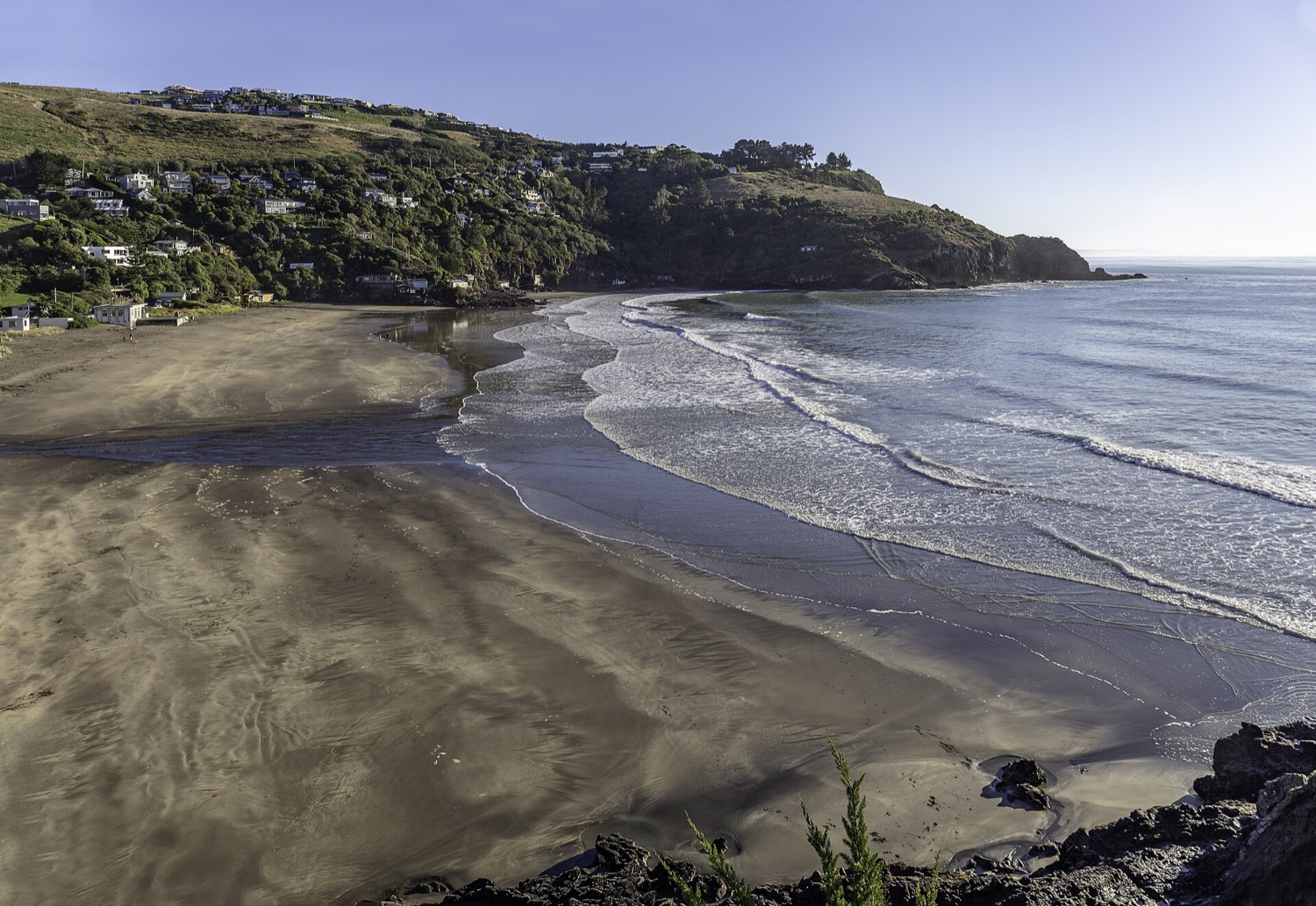
- New Brighton and Sumner: different beach cultures, with swimming and surf conditions that require local judgement.
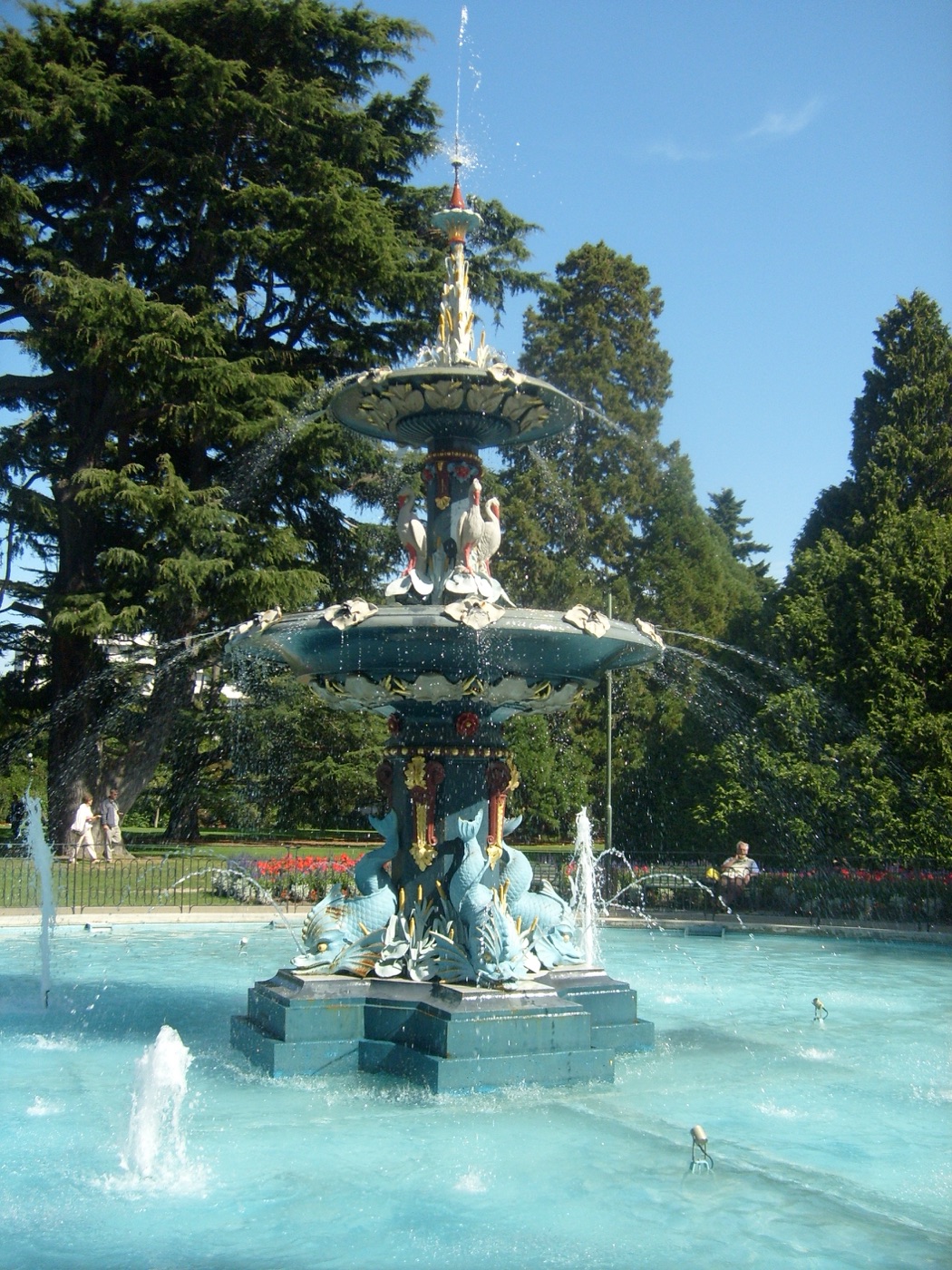
- Hagley Park and Botanic Gardens: large central green space for running, sport, events and family time.
- Banks Peninsula and Akaroa: harbour scenery, wildlife, walking and an easy weekend change of pace.
- Ski fields: Mt Hutt is the best-known major field within day-trip range; Porters and club fields add choice for experienced winter travellers.
- Arthur's Pass: alpine day walks and longer tramps, including Avalanche Peak for properly equipped and experienced hikers.
Food and culture
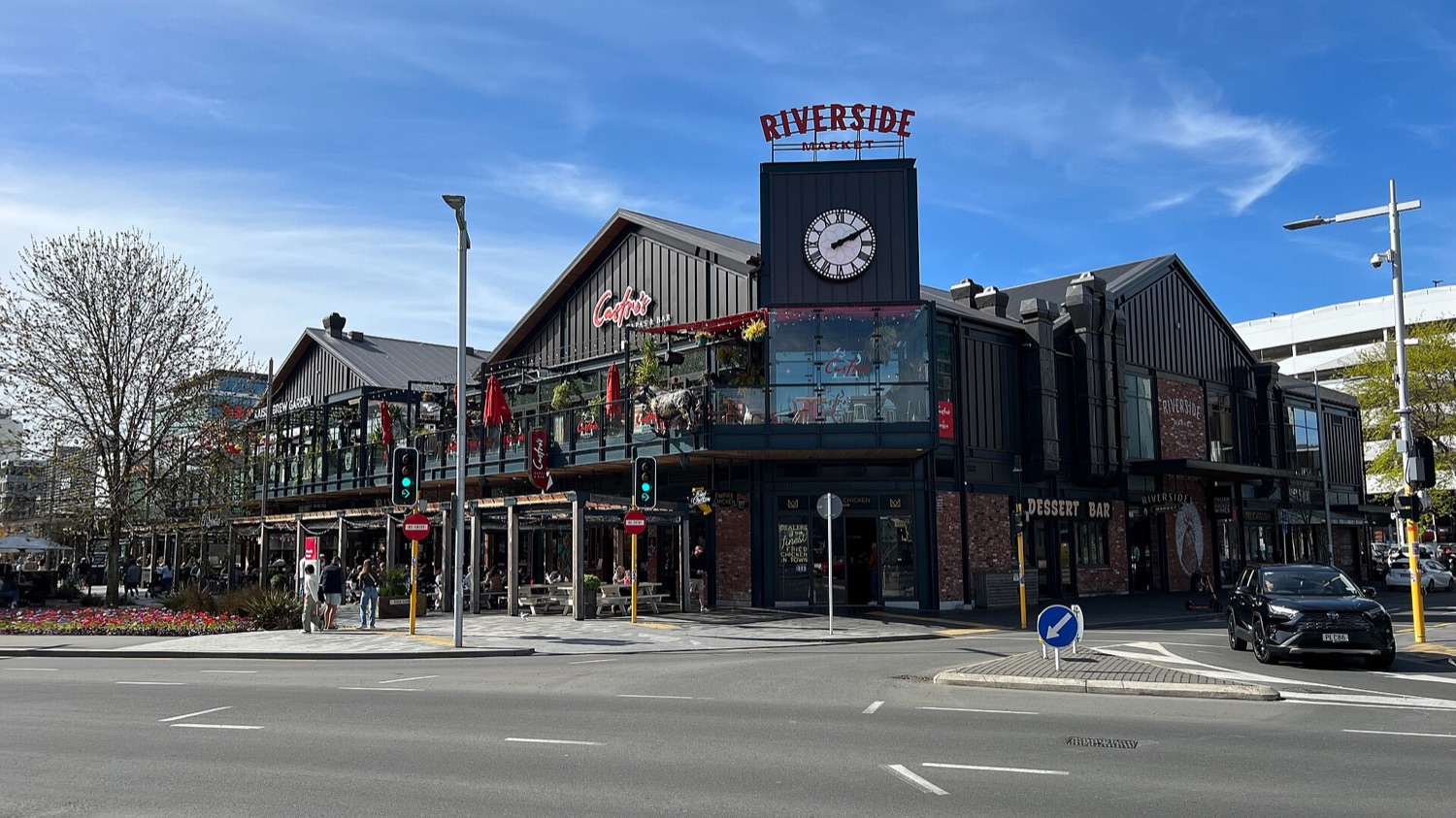
Riverside Market, New Regent Street, The Terrace and Victoria Street provide the city's most visible dining clusters. Christchurch's food culture is less dense than Wellington's but has improved significantly, with strong cafés, bakeries, modern New Zealand restaurants and access to Canterbury produce and wine.
Current examples include Londo, Story and The Monday Room, while Riverside Market works well for groups with different tastes. The arts centre, central library, theatres, galleries and festivals have added cultural depth to the rebuilt centre.
Resident anecdotes
In public discussions (the r/chch and r/newzealand subreddits are the most active places to read locals unfiltered), residents often praise the space, sunlight, parking, family practicality and access to mountains and coast. Common complaints include car dependence, quieter nightlife, cold homes and social circles that can feel established. These are recurring anecdotes, not representative survey findings.
05Dunedin
City position: The lowest broad housing costs in this comparison, with a small employment market anchored by students, health, education and research.
Demographics
Ethnic makeup
In the 2023 Census, 85.1% of Dunedin City residents identified as European, 10.8% as Māori, 3.9% as Pacific peoples, 9.3% as Asian, 1.7% as Middle Eastern, Latin American or African, and 2.6% as another ethnicity. Multiple responses are allowed, so the total exceeds 100%.
Dunedin is the least ethnically diverse of the five locations by these broad categories, but the university brings international students, academics and researchers into a small city. Māori history and Kāi Tahu identity are central to the region, while the health and education sectors add professional communities from across New Zealand and overseas.
At the 2023 Census, 21.1% of Dunedin City's residents were born overseas (about 27,000 people), the lowest share of the five cities and well below the national average of 28.8%.
Age and household profile
The city's median age was 37.0 years in 2023, but that headline hides an unusual age curve. Roughly 26.7% of residents were aged 15-29, reflecting the University of Otago and Otago Polytechnic. Outside the student precinct, many neighbourhoods are older and more settled. Couples without children made up about 46.5% of families in 2023.
An estimated 132,800 people lived in Dunedin in June 2025. The small scale creates a visible town-and-gown rhythm: term dates affect North Dunedin rents, hospitality and street life, while hospital and university employment support a stable professional base. Families often value short journeys, but specialist services and career moves may require travel or relocation.
Housing and property market
Property trend
Dunedin values rose strongly before and during the early pandemic period, then corrected as interest rates increased. QV reported an average value of approximately $660,000 in March 2026, about 19% above March 2020 and 2.2% higher than a year earlier. June 2026 data showed a 0.3% quarterly decline but a 3.4% increase since the start of the year. Recent results were uneven rather than clearly rising or falling.
The key issue is not just price. Dunedin has a large stock of older timber and masonry homes, steep sections and shaded valleys. Heating, insulation, moisture and winter sun can turn an apparently affordable property into an expensive home to operate. Student investment property is a separate submarket with tenancy, compliance and maintenance considerations.
Neighbourhood and price guide
| Area | Price | Often suits |
|---|---|---|
| Central city and North Dunedin | $$ | Students, university and hospital staff, car-light households |
| Roslyn, Māori Hill and Belleknowes | $$$ | Professionals and families wanting sun, schools and central access |
| St Clair and St Kilda | $$ | Beach lifestyle, families and cafés |
| Mornington, Kenmure and Kaikorai | $ | Families and buyers seeking value near the centre |
| Andersons Bay, Musselburgh and Tainui | $$ | Families, schools and peninsula access |
| Northeast Valley and Opoho | $$ | University access, character and bush setting |
| Mosgiel | $ | Flatter land, newer homes, families and airport access |
| Port Chalmers and peninsula settlements | $$ | Character, harbour or wildlife-oriented lifestyle |
Price is relative within the city: $ = most accessible, $$$ = premium.
Transport and accessibility
Modes, costs and practical reliability
Buses (Orbus)
Buses run under Orbus (the Otago regional brand) and are paid with a Bee Card, a prepaid tap-on, tap-off smartcard shared by most of New Zealand’s regional bus networks (Otago’s Orbus included), and much cheaper than a cash fare: $2.50 adult, with a free transfer within 45 minutes. Central coverage is good, but hills, lower evening frequency and cross-suburb routes lengthen some trips.
Driving
A used car (~$8k–$20k plus running costs) helps with hills, shift work, peninsula trips, Mosgiel and regional recreation. Ice, narrow streets, student-area parking and older driveways all need care.
Walking
The central city, university and hospital form a compact walkable triangle; outside that flat core, steep grades, rain and cold matter.
Cycling
Practical along selected flat corridors and for confident riders, but hills, weather and limited protected infrastructure hold back wider uptake.
🗺️Timetables and maps are at Orbus / Otago Regional Council (orc.govt.nz).
The 2023 Census showed 55.9% driving a private car to work, 10.0% using a company vehicle, 8.8% walking or jogging, 4.5% using a bus, 2.6% cycling and 12.6% working from home. Dunedin can support a car-light student or central professional life, but family, shift and peninsula routines are easier with a vehicle.
Planned upgrades
Otago Regional Council plans continued route and timetable changes, improved connections to South Dunedin and a transition toward a lower-emissions fleet. Its 2026 programme aims for about 80% of Dunedin trips to operate on zero-emission electric buses by the end of the year.
Current fare-zone and fare-cap ideas are under consultation and should not be treated as adopted until formally confirmed. Household decisions should use the current Bee Card fare and today's timetable.
Employment
Key industries and example jobs
Enterprise Dunedin is steering the city toward health and life sciences, anchored by the country's largest hospital rebuild, and digital and gaming through the Centre of Digital Excellence (CODE), on top of long-standing strength in education, agriculture, tourism and manufacturing. The University of Otago and the health sector remain the largest employers.
| Industry | Example jobs | What is changing | Practical note |
|---|---|---|---|
| Health | Nurse, doctor, allied-health professional, medical administrator, laboratory scientist | Hospital redevelopment, specialist care, aging population and digital health | Major source of stable work; registration and shift patterns matter |
| Education and research | Lecturer, researcher, technician, administrator, student support, education specialist | Health sciences, biomedical research, environment, humanities and applied learning | Funding and fixed-term contracts influence academic careers |
| Digital health and biotechnology | Software developer, bioinformatician, clinical data analyst, product specialist, regulatory professional | University-linked commercialisation, precision health and medical technology | Small but distinctive cluster; role volume is limited |
| Games and creative technology | Game developer, animator, designer, producer, sound specialist | Independent studios, simulation and interactive media | Portfolio and networks matter; teams are smaller than Auckland or Wellington |
| Professional and public services | Accountant, lawyer, planner, council adviser, engineer, analyst | Local infrastructure, environmental management and business support | Fewer employers means each vacancy matters more |
| Tourism, food and primary-sector services | Guide, hotel manager, chef, food producer, supply coordinator, agricultural adviser | Wildlife tourism, regional produce and lower-impact visitor experiences | Seasonal and regional demand influence some roles |
Dunedin's economy is anchored by institutions rather than corporate headquarters. The university, hospital and public services provide stability, while technology, games and biotechnology add specialist opportunities. The risk is concentration: losing one employer can mean a much smaller list of alternatives.
Income trend and wage outlook
This report uses about $62,000 gross annually as a planning benchmark. Stats NZ recorded median total personal income of $57,000 for residents aged 30-64 in 2023, up from $44,500 in 2018 and $39,300 in 2013. Lower housing costs can make moderate salaries workable, but power bills, maintenance and travel need realistic allowances.
Health, specialist research, construction and digital health offer the clearest areas of continuing demand. University funding and the hospital build will shape the market, but timelines and procurement can change. Remote work can widen options, although a household should not assume a remote role will remain permanent without contractual clarity.
Education
Universities and tertiary study
The University of Otago defines much of the city: New Zealand's oldest university and its standout for health sciences, home to the country's only dental school and to internationally recognised medicine, pharmacy, biomedical research and sciences, alongside strong business and humanities. Otago Polytechnic provides applied and vocational education in trades, nursing, design, IT, construction and business. The compact, residential-college campus culture is a big part of student life here.
The campus concentration creates a distinctive student experience and strong research ecosystem. It also produces term-driven housing demand, noise and competition in North Dunedin. Students and staff who prefer quiet should consider the walking or bus route from other suburbs rather than assuming the closest street is the best fit.
Lifestyle, climate and recreation
Climate and daily rhythm
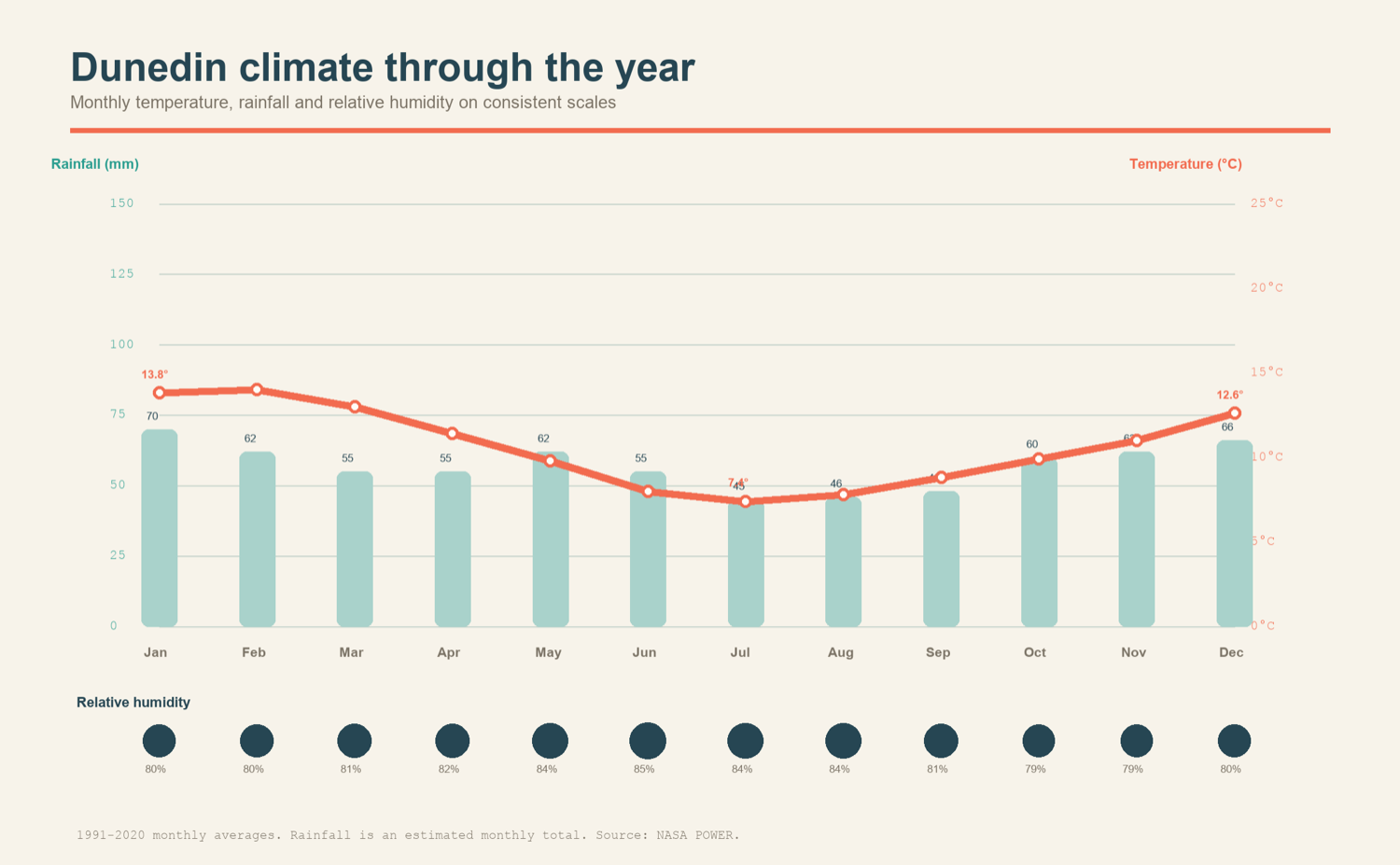
Dunedin is cool, coastal and changeable. A day can move through sun, wind and rain quickly. Winter temperatures are not extreme by international standards, but older, shaded housing can feel very cold. The city rewards people who prioritise building quality and own good waterproof layers.
The pace is slower, with strong university, arts and music traditions. It is possible to move between work, cafés, coast and wildlife without big-city congestion. Shopping and flight choice are more limited, and some specialised needs require travel.
Outdoors and attractions
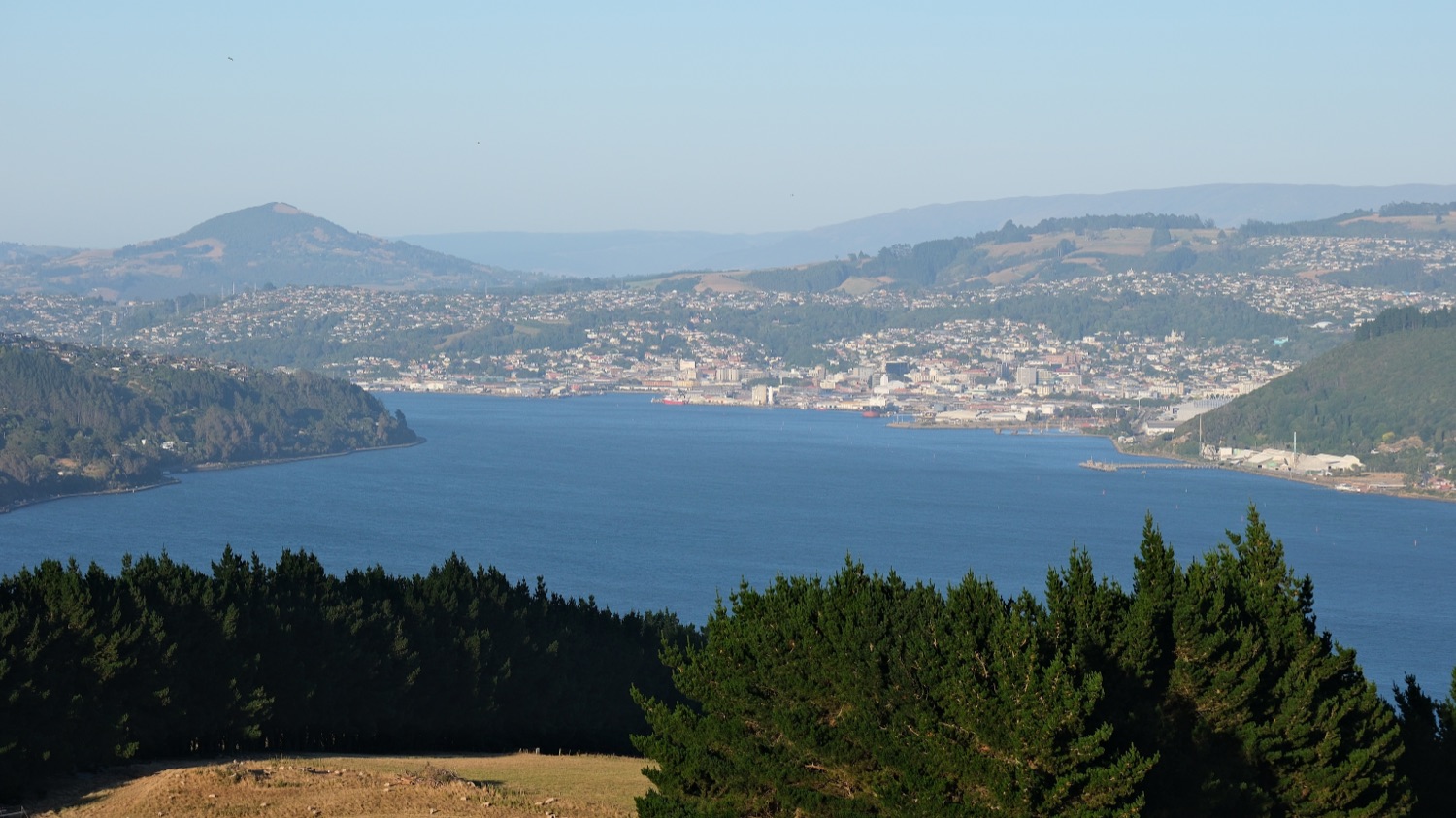
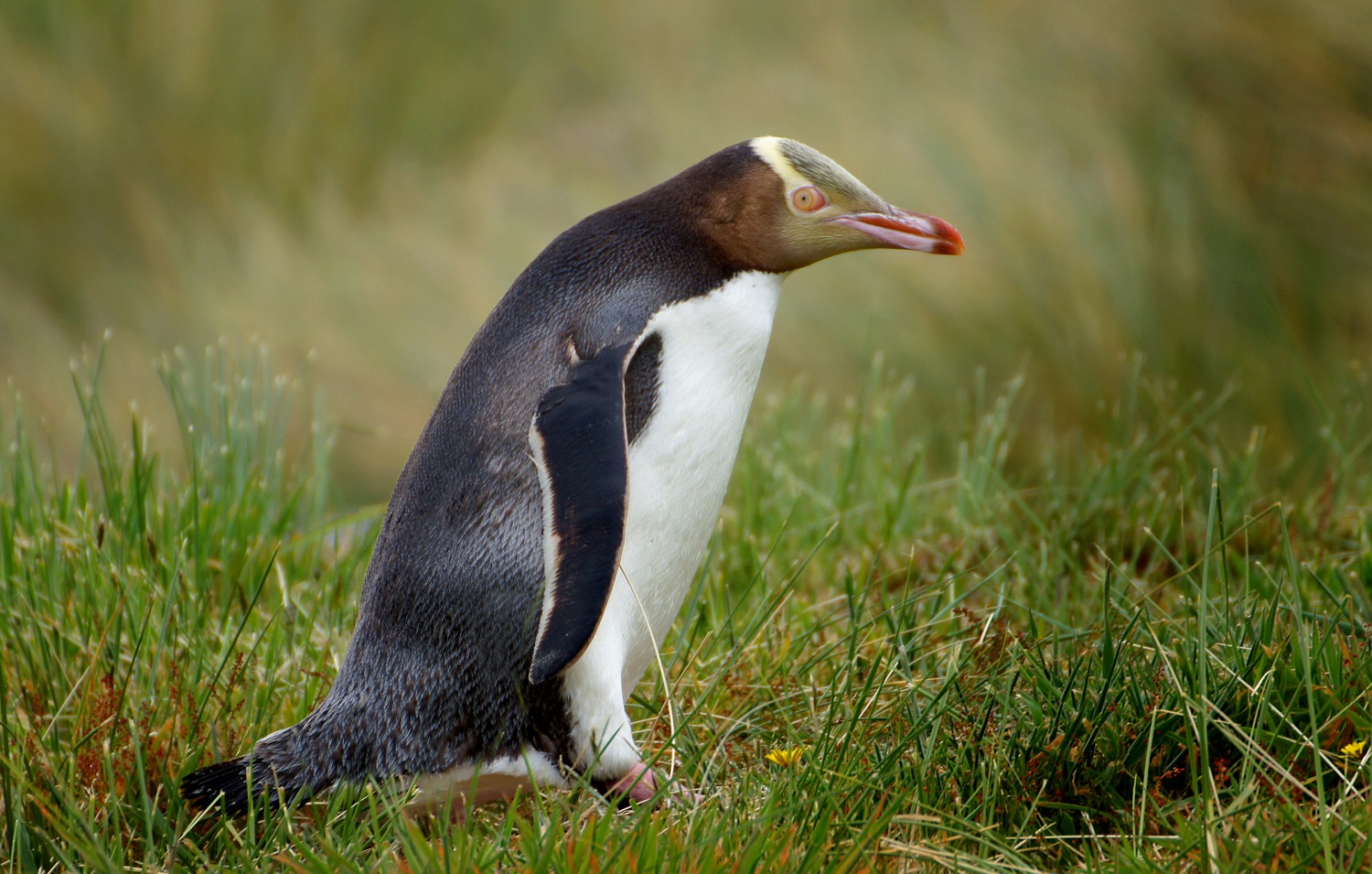
- Otago Peninsula: albatross, penguins, harbour views, beaches and winding scenic roads.
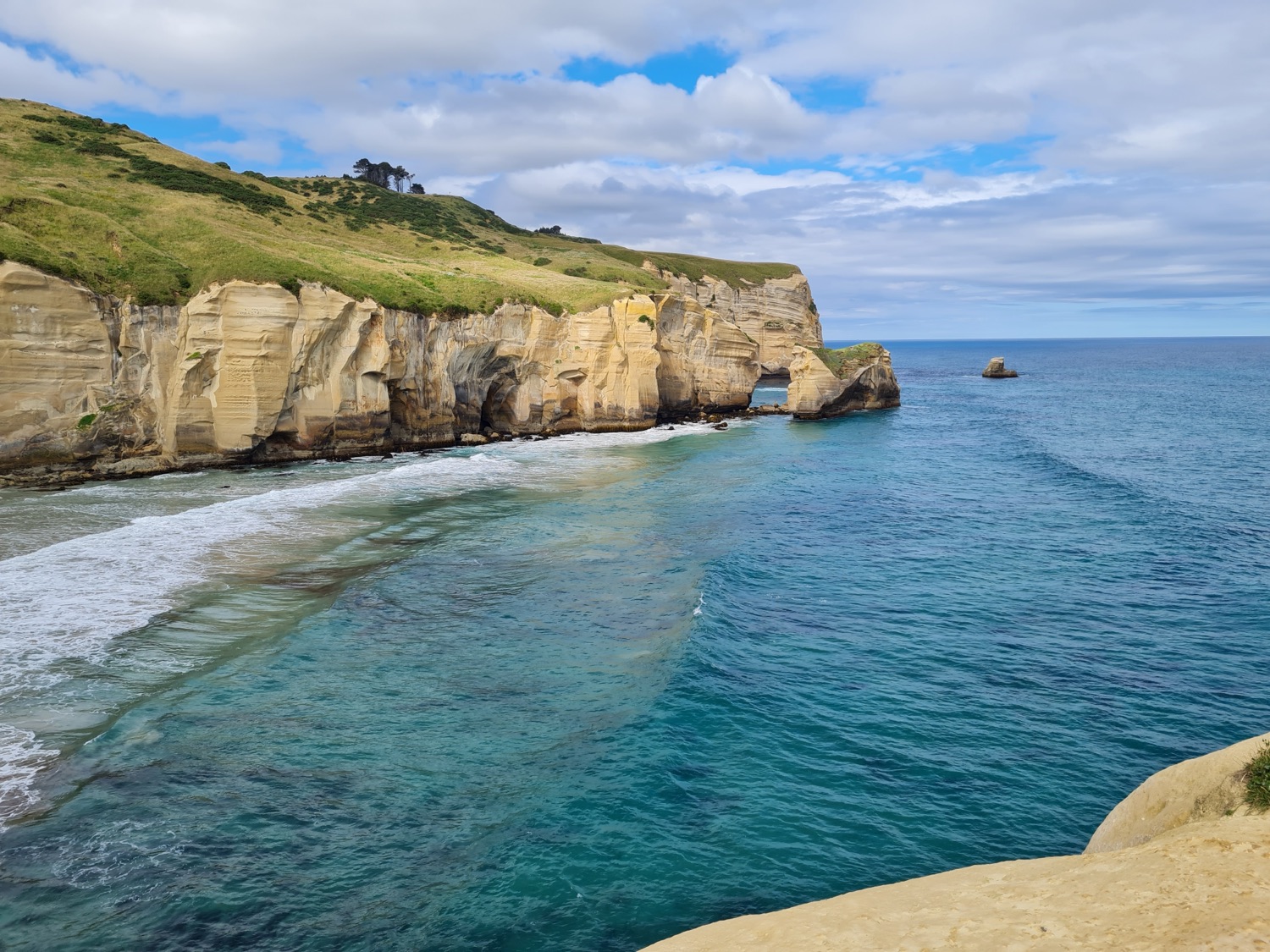
- Tunnel Beach Track: sandstone cliffs and coast, with steep access and conditions that need respect.
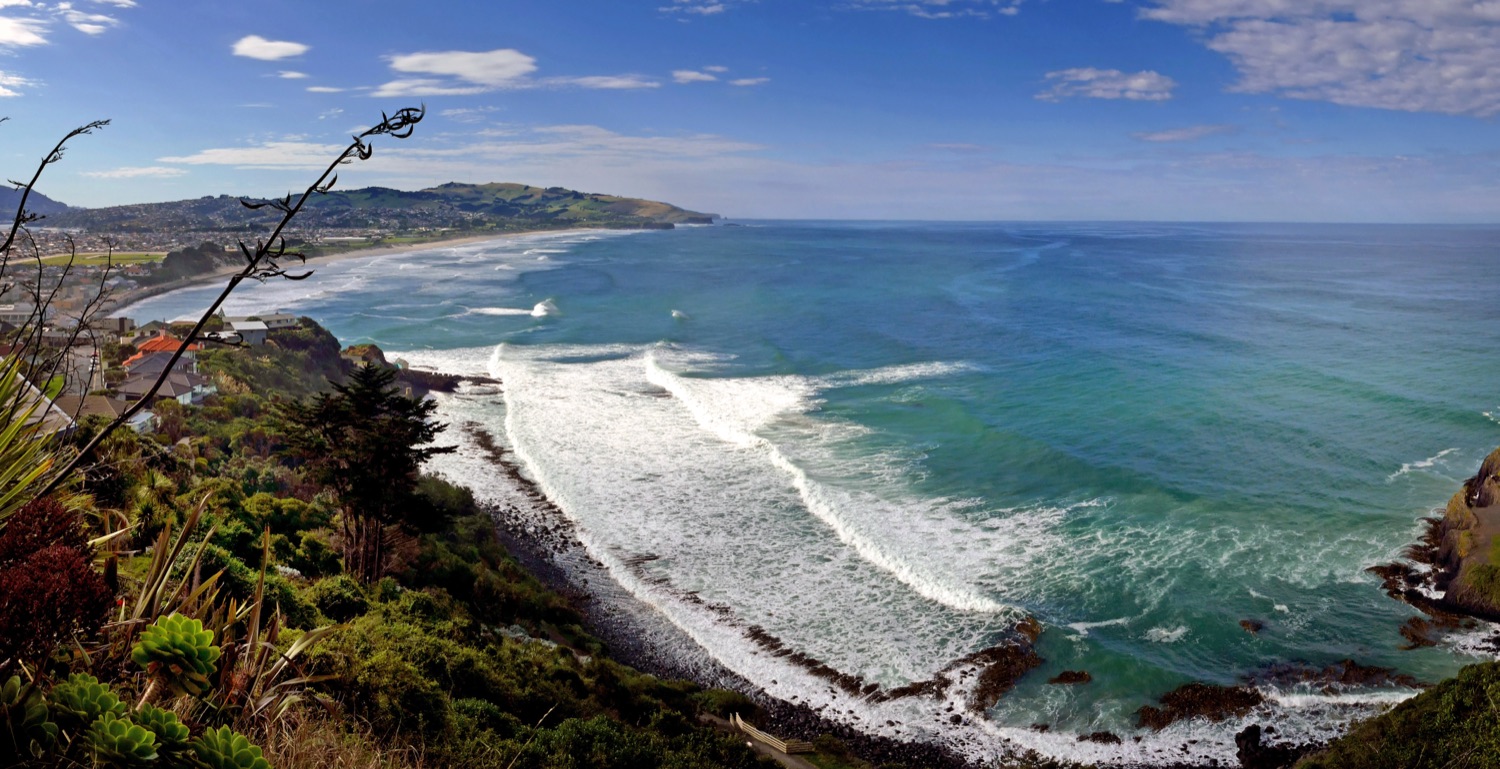
- Sandfly Bay: dramatic dunes, wildlife and exposed beach walking.
- Signal Hill and Ross Creek: close-to-city mountain biking, running and bush walks.
- Pineapple Track and Flagstaff: hill walking with broad views and fast-changing weather.
- St Clair and St Kilda: surfing, beach walks and cafés, with cold water and strong coastal conditions.

Food and culture
The Octagon, Vogel Street and Warehouse Precinct, St Clair and Roslyn form the most useful dining clusters. Dunedin has strong coffee, baking, craft beer and small independent restaurants, supported by students and regional produce. Current examples include Moiety, Plato and Paasha, while neighbourhood cafés often matter more to daily life than destination dining.
The city is known for literature, live music, heritage architecture and a creative scene that is larger than its population suggests. Events can feel intimate and community-led rather than metropolitan.


Resident anecdotes
In public discussions (the r/dunedin and r/newzealand subreddits are the liveliest), residents often praise the city's character, wildlife, short travel times and student energy. Common warnings concern cold or damp housing, fewer career alternatives and the need to travel for some services or flights. Housing experiences vary sharply by property, so these anecdotes should be followed by a careful inspection.
06Queenstown
City position: The strongest immediate mountain lifestyle and visitor economy, but the hardest housing-to-wage equation for local residents.
Demographics
Ethnic makeup
Queenstown is best understood through Queenstown-Lakes district data. In the 2023 Census, 82.8% of residents identified as European, 6.4% as Māori, 1.5% as Pacific peoples, 10.5% as Asian, 5.3% as Middle Eastern, Latin American or African, and 2.2% as another ethnicity. Multiple responses are allowed, so percentages exceed 100%.
The high Middle Eastern, Latin American or African share relative to other New Zealand districts reflects an international worker population, especially in tourism, hospitality and construction. Country-of-birth and visa status would tell another part of the story, but the broad result is clear: Queenstown is small yet internationally connected.
At the 2023 Census, 40.2% of the Queenstown-Lakes district's residents were born overseas (about 19,000 people), second only to Auckland among the five cities and far above the national average of 28.8%.
Age and household profile
The district's median age was 35.5 years in 2023. The population reached 47,808 at the census, up 22.1% from 2018 and 69.4% from 2013. That pace of growth affects almost every system: rentals, roads, schools, health services and construction.
The district includes Queenstown, Frankton, Arrowtown, Wānaka and smaller settlements. It should not be read as one town. The workforce is relatively young and mobile, with shared housing, seasonal work and employer-linked accommodation more common than in the other cities. Families are growing in number, particularly around Frankton and Wānaka, but capacity can lag behind demand.
Housing and property market
Property trend
Queenstown-Lakes combines restricted developable land, international demand, rapid population growth and a large visitor economy. QV reported an average value of approximately $1.93 million in March 2026, about 54.7% above March 2020 and 6.2% higher than a year earlier. June 2026 data showed only 0.1% quarterly growth, suggesting the pace had paused rather than the affordability problem disappearing.
The district median household income was about $125,600 in 2023, higher than the national figure, but purchase and rent costs are also exceptional. A high household income can still be stretched by childcare, commuting, winter energy and visitor pricing. Employer accommodation can help initially, but it ties housing security to the job and needs a clear exit plan.
Neighbourhood and price guide
| Area | Price | Often suits |
|---|---|---|
| Queenstown centre and Fernhill | $$$ | Hospitality, nightlife, views and a short central commute |
| Frankton, Five Mile and Remarkables Park | $$ | Airport, retail, schools, services and major employment hubs |
| Kelvin Heights and Jack's Point | $$$ | Golf, new housing, scenery and lifestyle buyers |
| Arthurs Point | $$ | Outdoor access, workers between Queenstown and Coronet Peak |
| Arrowtown and Lake Hayes | $$$ | Heritage character, schools and family lifestyle |
| Shotover Country and Hanley's Farm | $$ | Newer family housing and growing communities |
| Wānaka | $$$ | A separate lake town, outdoor lifestyle and remote or local work |
| Cromwell, wider Central Otago | $ | Regional work, more space and a quieter base |
Price is relative within the city: $ = most accessible, $$$ = premium.
Transport and accessibility
Modes, costs and practical reliability
Buses (Orbus)
Buses run under Orbus, paid with the same regional Bee Card: a very low $2.50 adult fare (even to the airport), plus a free transfer within 45 minutes, cash fares are much higher. The Frankton–airport–centre spine is useful and getting more frequent, but congestion still slows buses and split hospitality shifts do not always line up with the timetable.
Ferry
A lake ferry (about $10 with a Bee Card) dodges some road congestion and is scenic, with limited stops and a higher fare.
Driving
A used car (~$8k–$20k plus running costs, and budget for tyres) gives flexibility for shift work, ski fields, trailheads and dispersed housing. SH6 (State Highway 6) bottlenecks, winter conditions, pricey parking and visitor traffic are the constant frustrations.
Walking and cycling
Superb trails and practical short trips in flat areas, but steep terrain, ice, narrow roads and disconnected settlements limit everyday use.
🗺️Timetables and maps are at Orbus / Otago Regional Council (orc.govt.nz).
Queenstown's $2.50 Bee Card bus fare is attractive, but fare and service are different questions. A reliable commute depends on living and working along the useful spine. A rental with a lake view may create a difficult shift commute if it requires a car and scarce parking.
Planned upgrades
The New Zealand Transport Agency's Queenstown package includes an expanded Frankton Bus Hub, SH6 and SH6A intersection improvements, bus priority and shared paths. The hub expansion is intended to double capacity and support a growing network. Otago Regional Council also plans new or improved routes, frequencies and ferry services.
Longer-term planning considers bus lanes between Frankton and Queenstown and further priority on SH6A. These projects respond to genuine growth pressure, but construction itself can cause disruption. Use current peak travel time when assessing a property, then monitor confirmed milestones.
Employment
Key industries and example jobs
With tourism still dominant, the Queenstown Lakes Economic Diversification Plan (2024), "New pathways to a thriving future", is a deliberate push to broaden the base: attracting and growing technology companies, outdoor-products businesses and creative industries, and lifting local workforce skills. For now, hospitality, tourism and construction still drive most hiring.
| Industry | Example jobs | What is changing | Practical note |
|---|---|---|---|
| Tourism and hospitality | Hotel manager, chef, housekeeper, guide, reservations specialist, revenue manager, events coordinator | Higher-value tourism, premium accommodation, sustainability and year-round experiences | Staff shortages and housing are linked; seasonality and weekend work are normal |
| Construction and property | Builder, electrician, plumber, quantity surveyor, site manager, planner, property manager | Population growth, hotels, infrastructure and housing intensification | Strong demand can coexist with project cycles and expensive worker housing |
| Aviation and transport | Pilot, aircraft engineer, airport operations, driver, dispatcher, logistics coordinator | Visitor growth, regional aviation and transport-system expansion | Security, licensing and irregular hours affect access |
| Outdoor recreation | Ski instructor, patroller, bike mechanic, guide, rental technician, operations manager | Four-season activity, trail development and premium guided experiences | Many roles are seasonal and physically demanding |
| Film and creative production | Location coordinator, production assistant, drone operator, logistics specialist, photographer | Location-based production and commercial content | Project work is irregular and network-led |
| Tourism technology and professional services | Software developer, digital marketer, accountant, revenue analyst, booking-platform specialist | Automation, direct booking, dynamic pricing and visitor data | Small cluster, often combined with remote or national clients |
| Health, education and public services | Nurse, teacher, early-childhood educator, planner, council officer, emergency services | Rapid population growth and service catch-up | Essential workers face the same housing pressure as tourism staff |
Queenstown's economy is diversifying, but tourism remains the foundation and construction is closely tied to growth. A high vacancy count does not automatically mean a sustainable career. Ask whether work is permanent, seasonal or tied to one project, and whether wages support independent housing.
Income trend and wage outlook
This report uses about $65,000 gross annually as a planning benchmark. Stats NZ recorded median total personal income of $61,600 for residents aged 30-64 in 2023, up from $49,600 in 2018 and $41,000 in 2013. The 50% decade increase was the strongest in this comparison, yet property and rent also grew dramatically.
Wage pressure is strongest where employers cannot recruit because housing is unavailable: experienced hospitality managers, chefs, trades, health staff and transport specialists. That does not guarantee rapid wage growth, because many businesses operate with seasonal margins. Employer housing, meals, transport, overtime and guaranteed hours can be as important as base salary.
Education
Universities and tertiary study
Queenstown has specialised tertiary provision rather than a comprehensive university. Queenstown Resort College focuses on tourism, hospitality and business with paid industry internships, and Otago Polytechnic runs a Queenstown campus. For a full degree most people study in Dunedin or by distance, so factor travel or online delivery into your plans.
Students seeking a broad university campus experience usually need to relocate to Dunedin, Christchurch, Wellington or Auckland. A remote degree can work for an established resident, but it does not replace laboratories, placements or campus networks required by some programmes.
Lifestyle, climate and recreation
Climate and daily rhythm
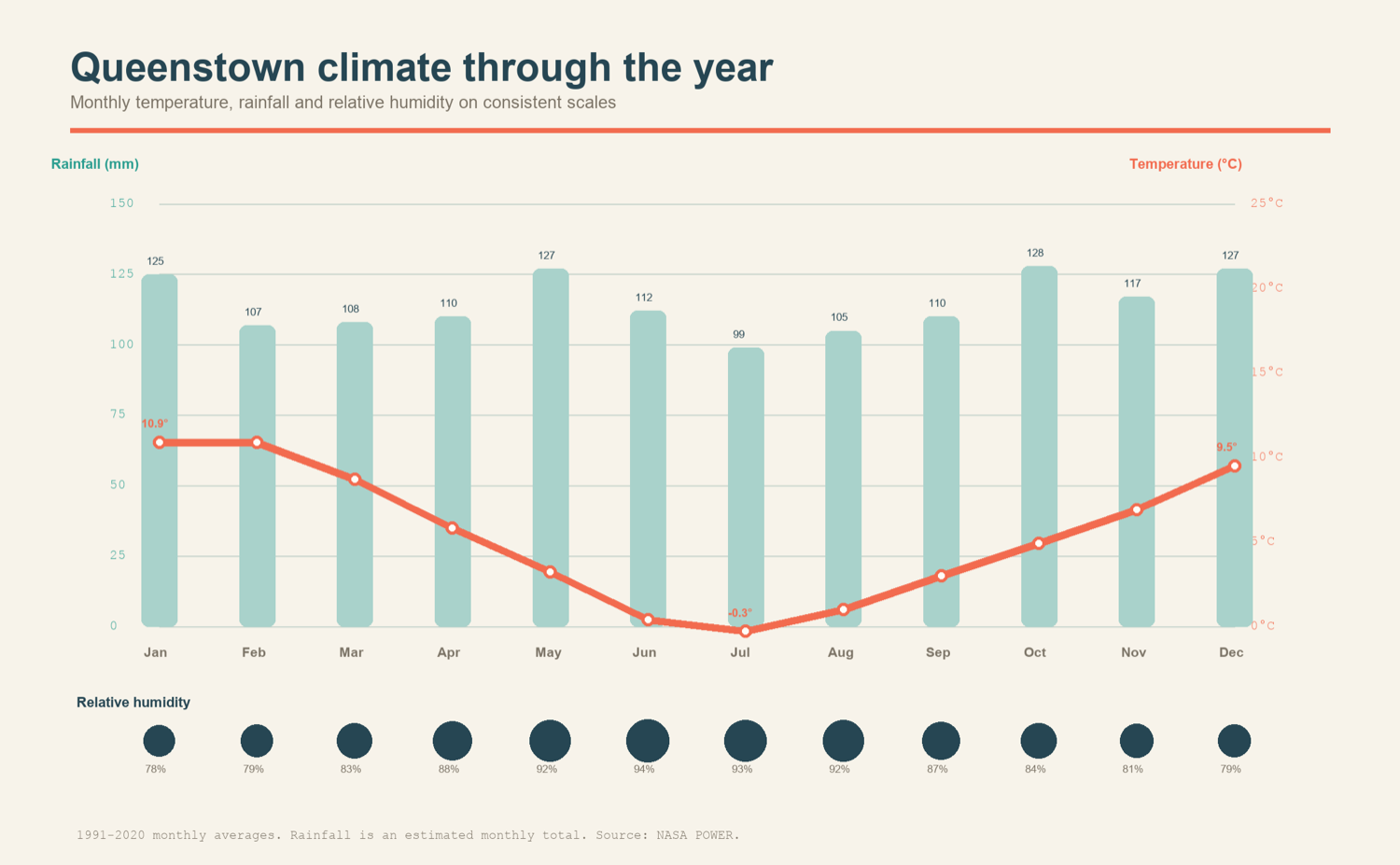
Queenstown has warm summer days, cool nights and cold winters. Snow in town is intermittent, but ice, shaded roads and mountain weather are everyday planning issues. The visitor calendar affects traffic, prices, work hours and the feeling of the centre. Residents often build a life around Frankton, Arrowtown or a local settlement rather than treating the lakefront centre as their everyday neighbourhood.
Outdoors and attractions
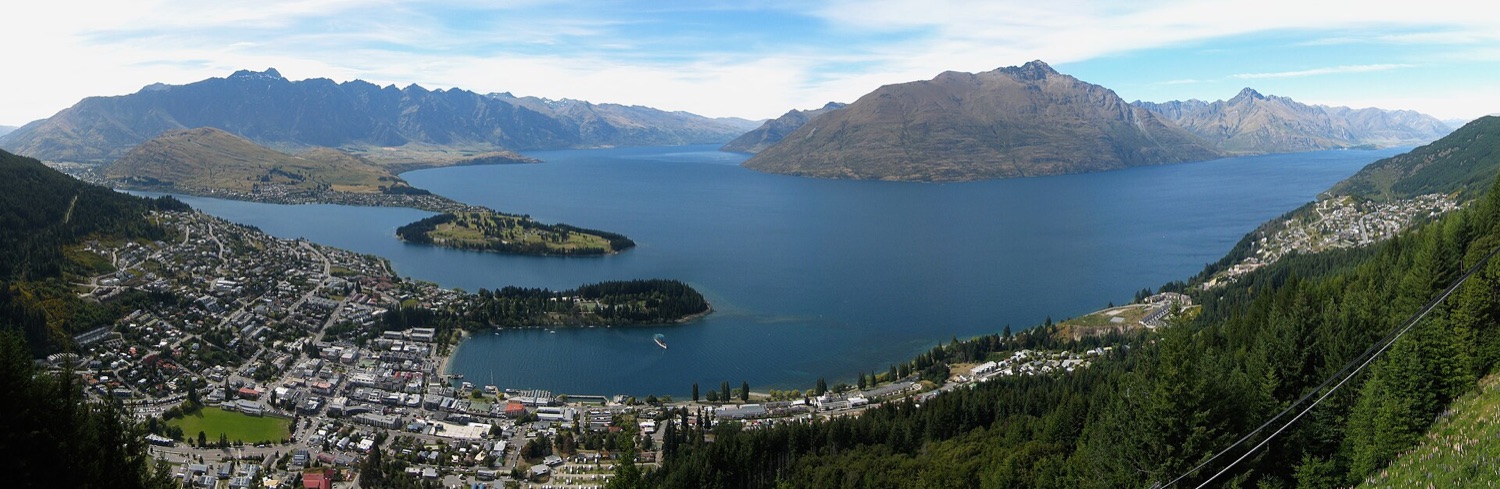
- Ben Lomond Track: a major climb from near town with substantial elevation and alpine exposure. Conditions and fitness matter.
- Queenstown Hill Time Walk: a more accessible climb with wide basin and lake views.
- Tiki Trail and Skyline area: steep forest access from town, with downhill traffic and commercial activity to consider.
- Queenstown Trail: a broad cycling and walking network linking lake, rivers, vineyards and settlements.
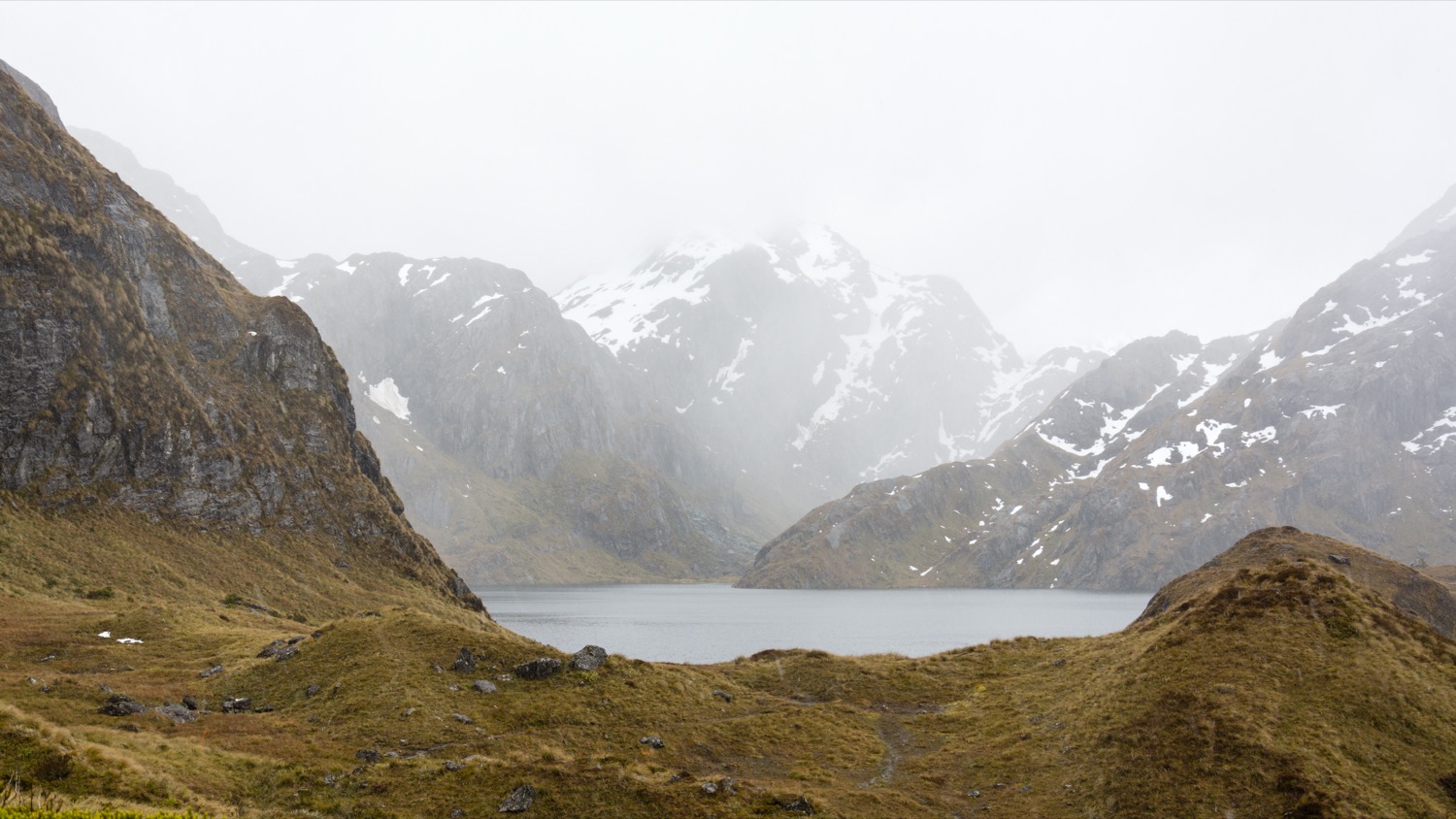
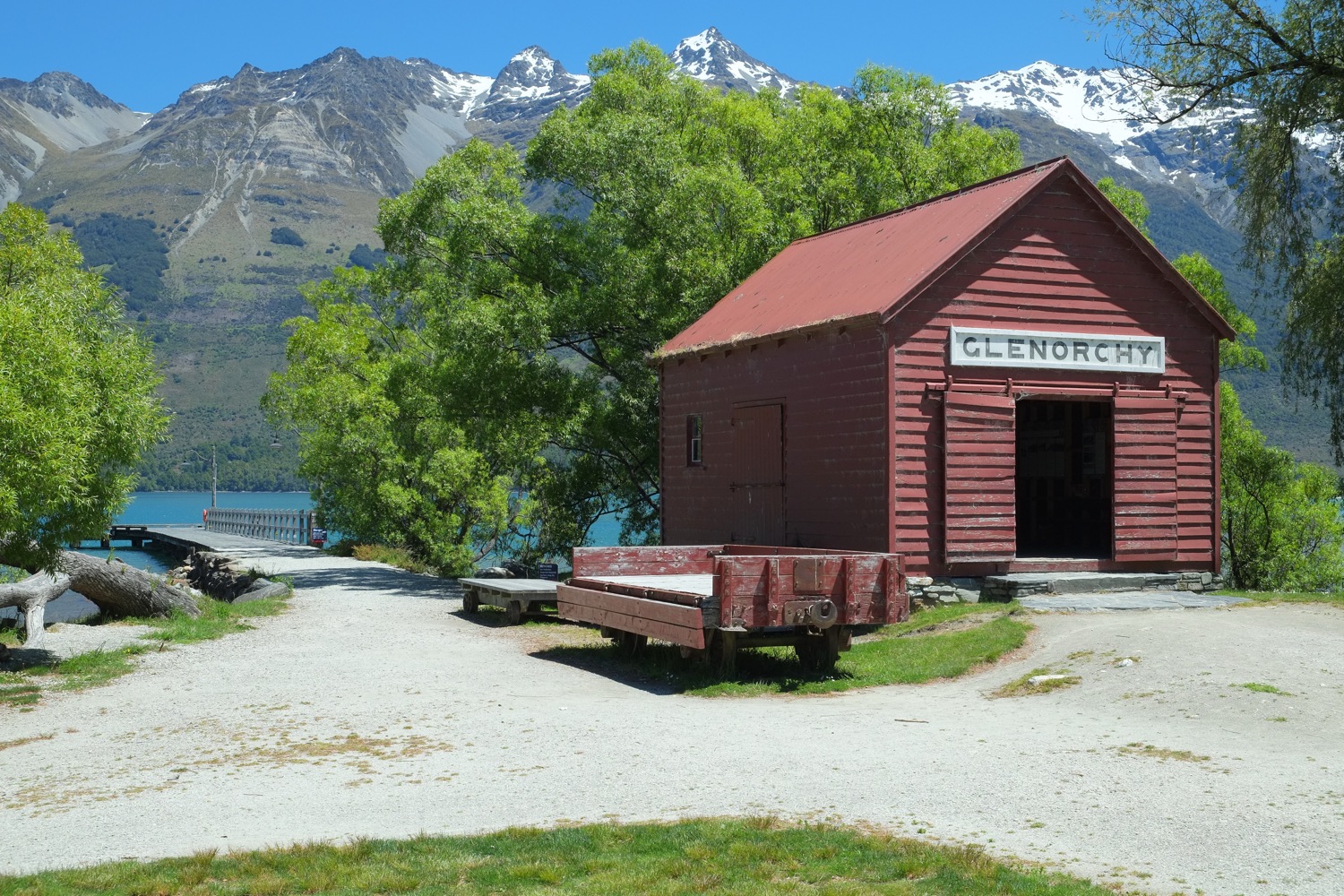
- Routeburn Track: one of New Zealand's Great Walks, accessed from the Glenorchy side with bookings and alpine preparation required.
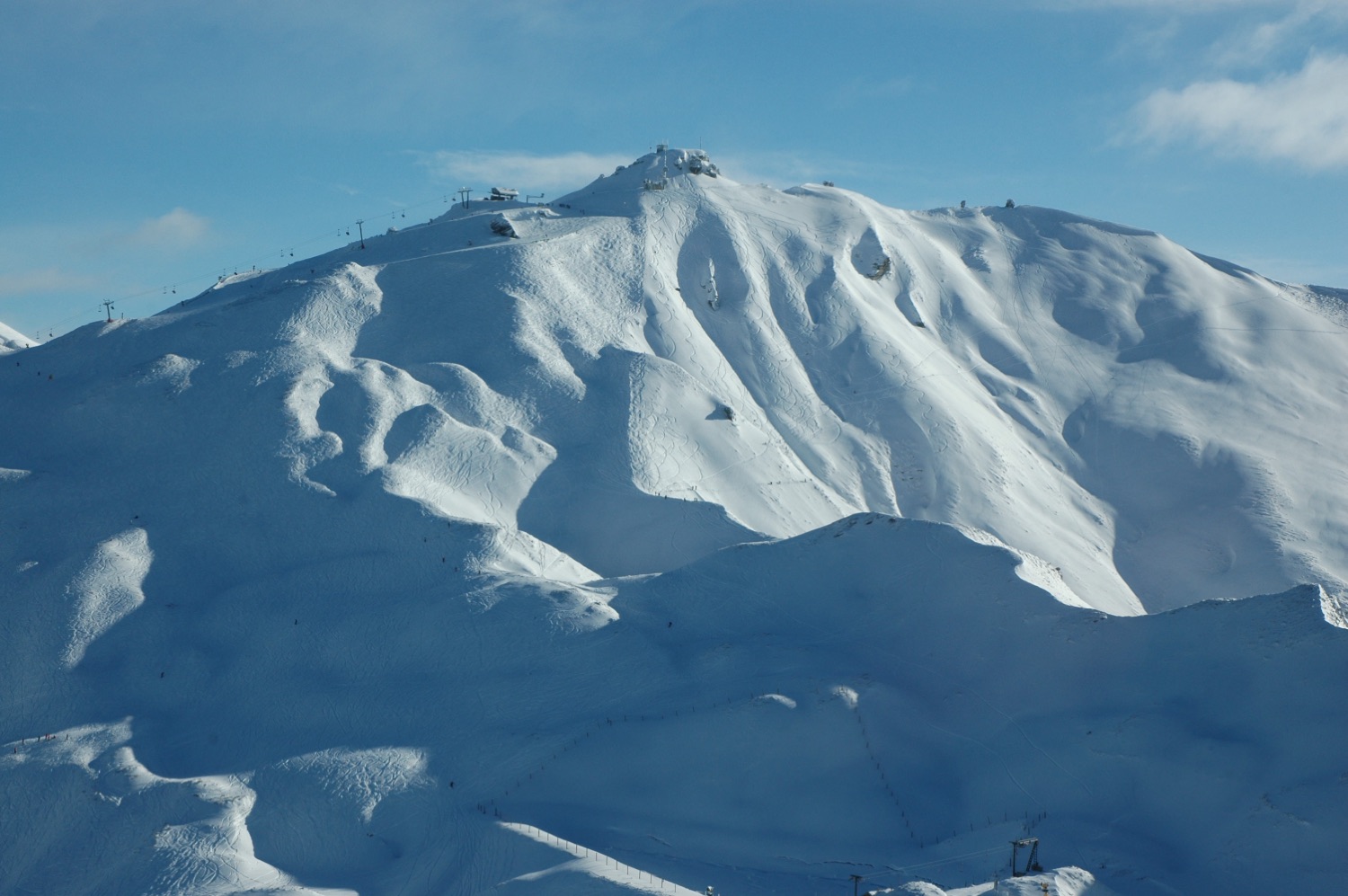
- Coronet Peak: the closest major ski field to Queenstown and a summer mountain-bike venue.
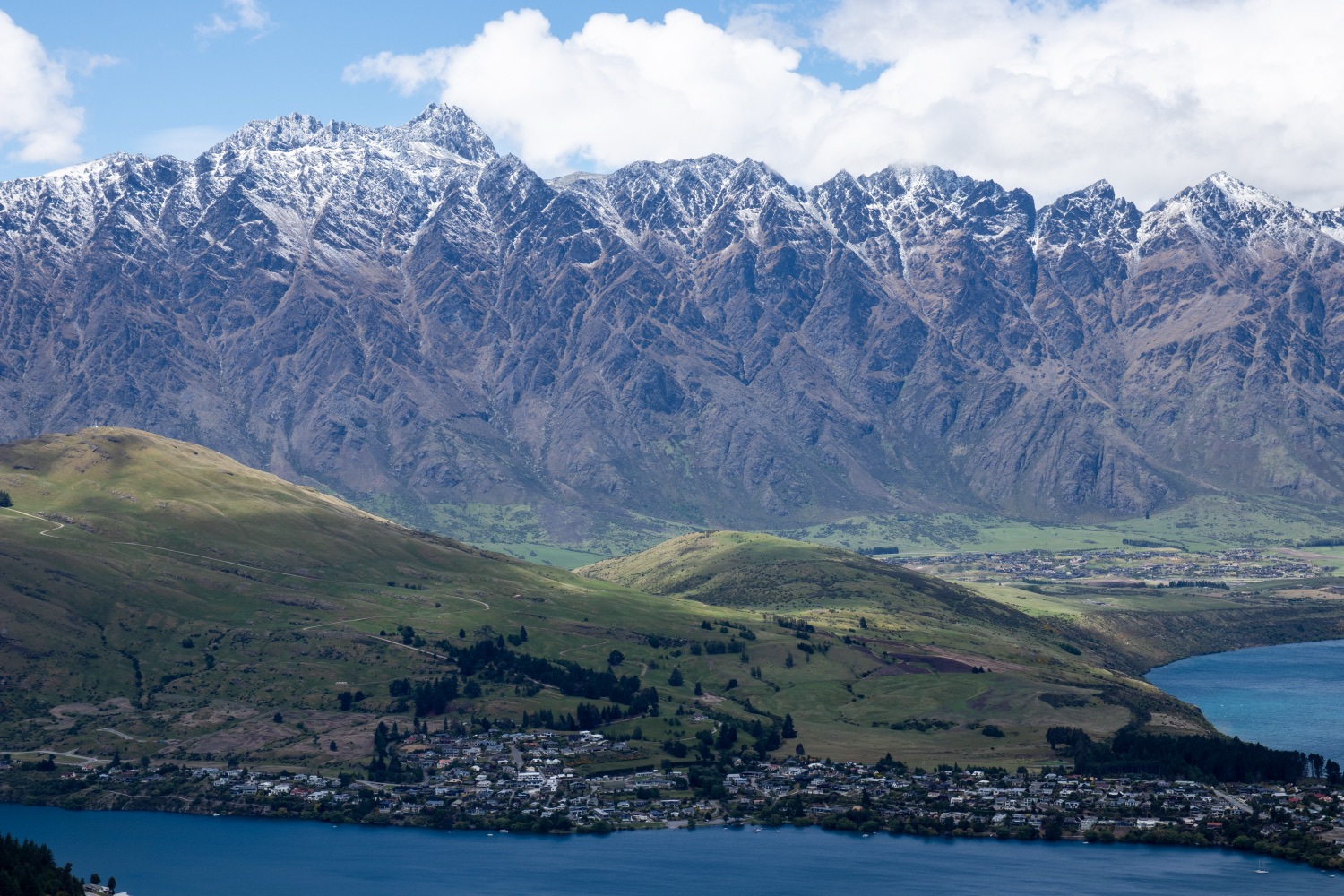
- The Remarkables: high-alpine skiing with a dramatic access road and changing winter conditions.
- Cardrona and Treble Cone: major Wānaka-side ski areas, reached over the Crown Range or through Cromwell depending conditions.
- Glenorchy and Paradise: scenery, trail access and film locations, with a road that deserves time and weather awareness.
Food and culture
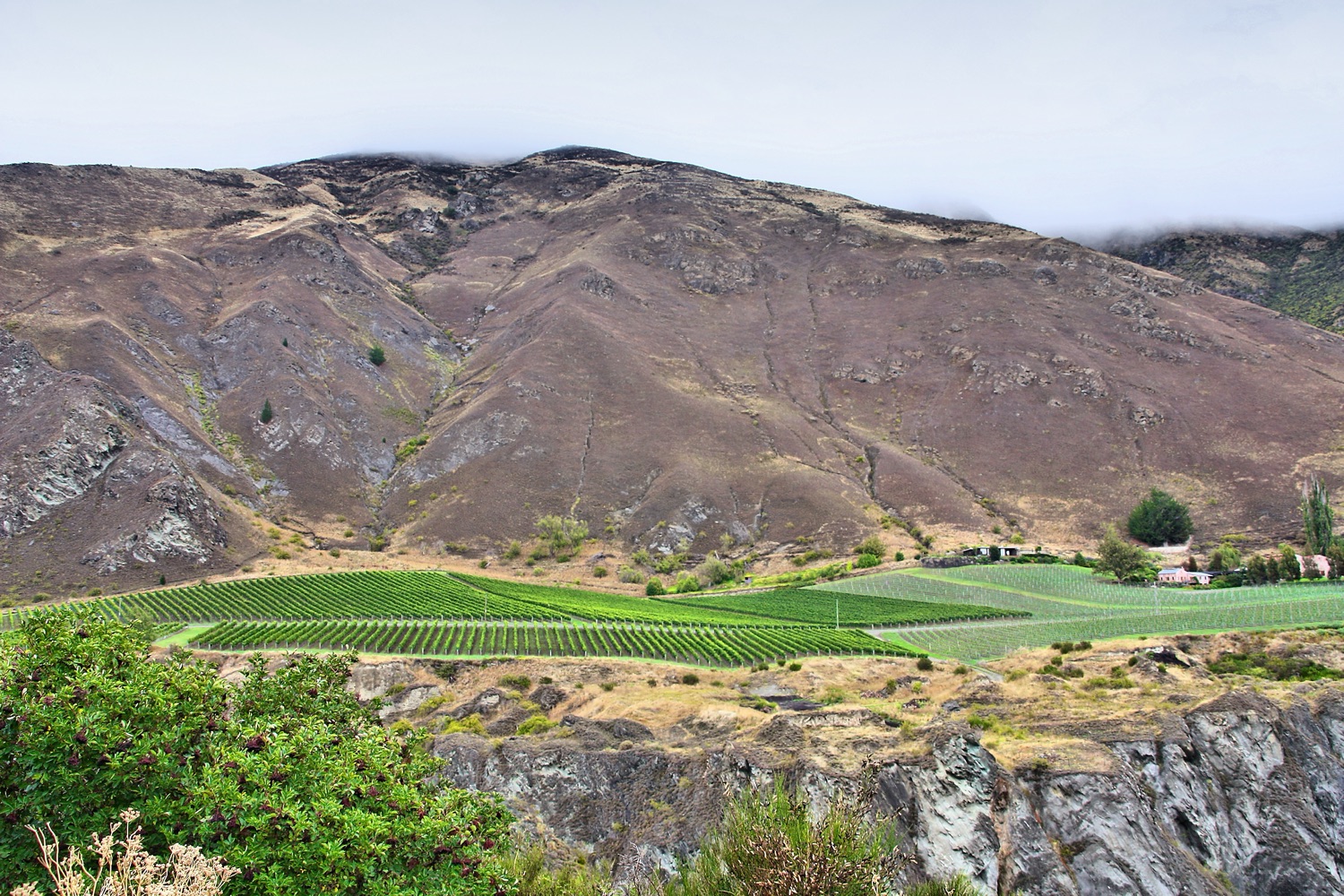
Queenstown's food scene is unusually strong for its resident population because it serves an international visitor market. The centre offers dense casual dining and bars, Frankton provides more everyday options, Arrowtown has destination restaurants, and Gibbston connects wine with long lunches.
Current examples include Sherwood, Rātā, Amisfield near Arrowtown and Aosta in Arrowtown. Premium restaurants often require bookings and are not representative of an ordinary weekly budget. Local life also includes sports clubs, schools, volunteer networks and outdoor communities that are less visible than the tourism centre.

Resident anecdotes
In public discussions (the r/queenstown and r/newzealand subreddits are the liveliest), residents often praise immediate access to mountains and outdoor sport. They also describe difficult housing searches, traffic, visitor pricing and seasonal turnover in friendship groups. Employment, housing and transport should be planned together before moving. These are recurring anecdotes, not representative survey findings.
07Score it yourself
Below are the scores we gave each city. Adjust the weights and rankings to match your own priorities, then hit Tabulate to see your top pick. Rank 1 to 5 per row, no repeats, 5 = best fit.
| Criterion | Weight % | Auckland | Wellington | Christchurch | Dunedin | Queenstown |
|---|---|---|---|---|---|---|
| Culture | ||||||
| Transport | ||||||
| Jobs | ||||||
| Cost of living & housing | ||||||
| Community | ||||||
| Lifestyle & recreation |
Rank 1–5 in each row, 5 = best fit. Nothing is saved or sent, it runs entirely in your browser.
Before you commit to a move: use the official source at the point of decision. Check Immigration New Zealand for visas, the relevant occupational authority for registration, current job advertisements for salary, live property listings for price, the council for hazards, the insurer for cover, the school for enrolment and the transport operator for current fare and service information.
Everything here is free and always will be. If this saved you a few hours, you can chip in whatever you like.